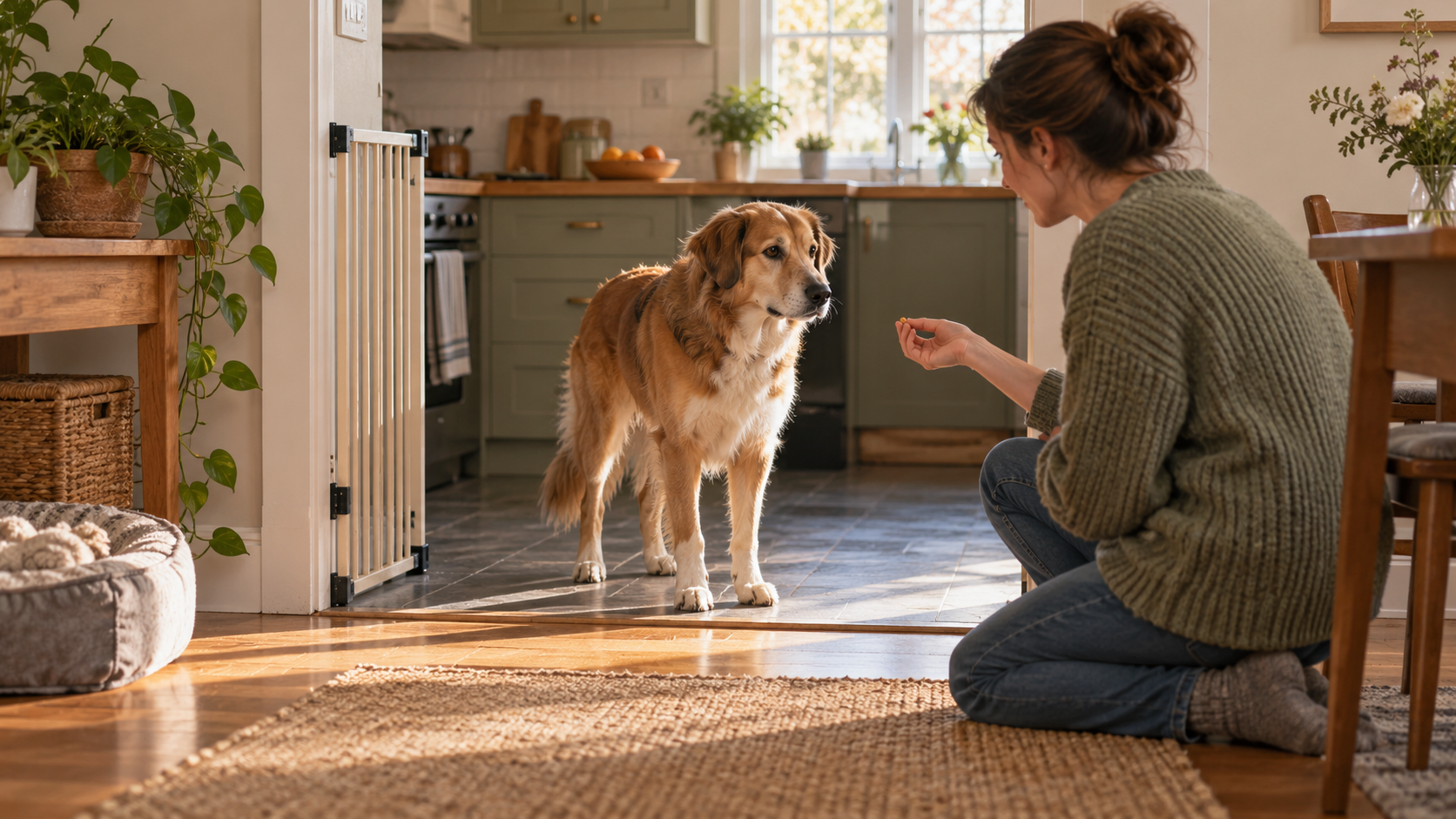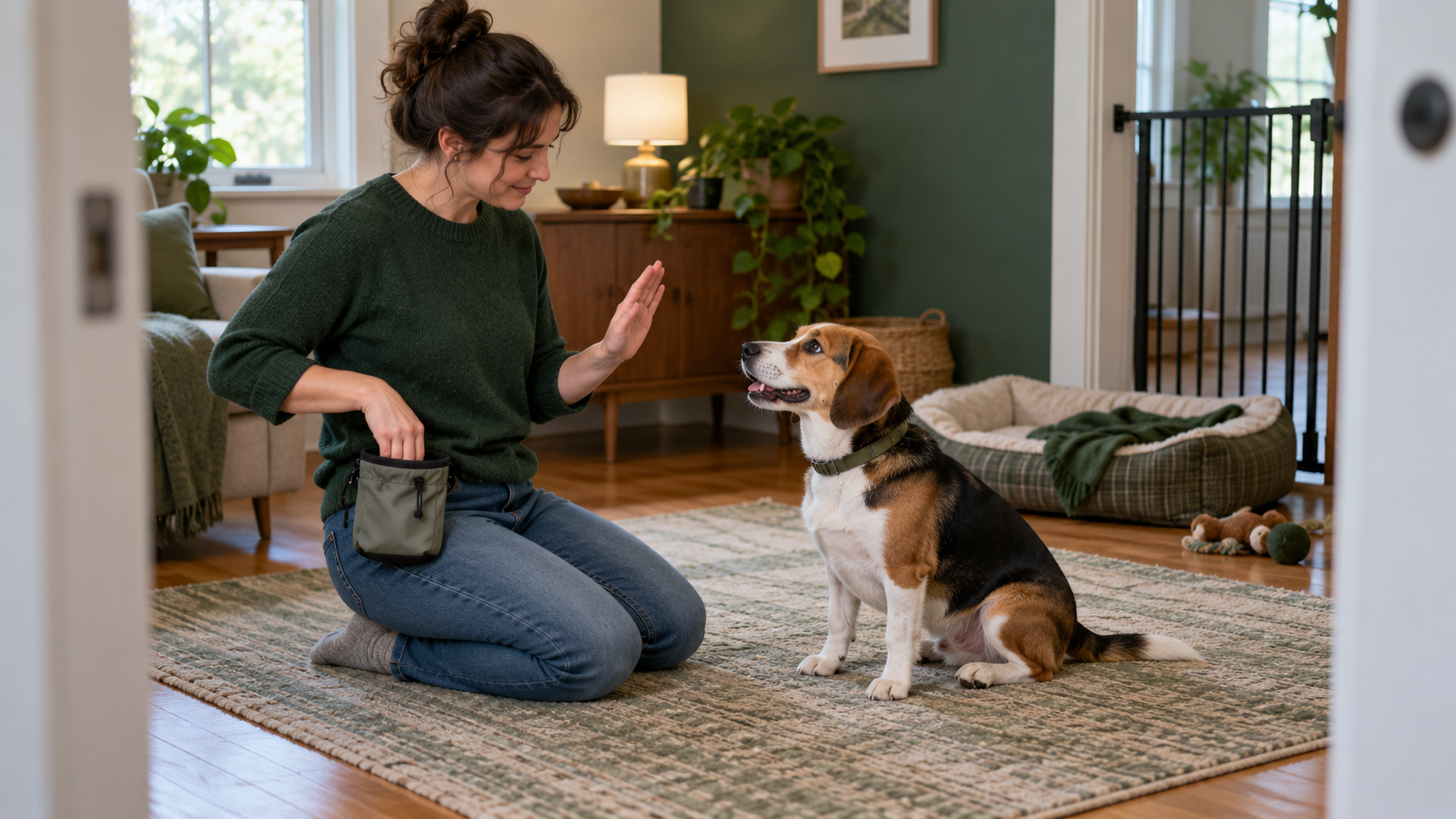
Reward-based training gives a dog useful information: this action worked, and it is worth trying again. For a beginner, the challenge is rarely knowing dozens of techniques. It is arranging one simple lesson clearly enough that both ends of the leash can succeed.
Start With One Safe, Useful Goal
Choose a behavior you can see and describe. “Be good” is vague. “Stand with four paws on the floor while I clip the leash” is trainable. Pick something that matters in daily life but does not carry immediate high risk. A sit in the kitchen, eye contact when a name is spoken, or stepping onto a mat are better first projects than off-leash recall near traffic.
Write the finished picture in one sentence. Decide where you will practice, what cue you will use, and what counts as success today. Today’s criterion might be one paw touching the mat, not a thirty-second settle. Clear criteria keep you from rewarding randomly or raising the difficulty because one repetition looked good.
Before starting, reduce distractions, prepare ten to fifteen small rewards, and make sure the dog has had a chance to toilet. Stop if the dog appears painful, frightened, unusually tired, or unable to eat.
Choose Rewards Your Dog Actually Values
A reward is defined by its effect on behavior, not by the giver’s intention. Some dogs work for food; others value a toy, a chance to sniff, access through a door, or friendly social contact. A pat on the head is not a reward if the dog ducks away.
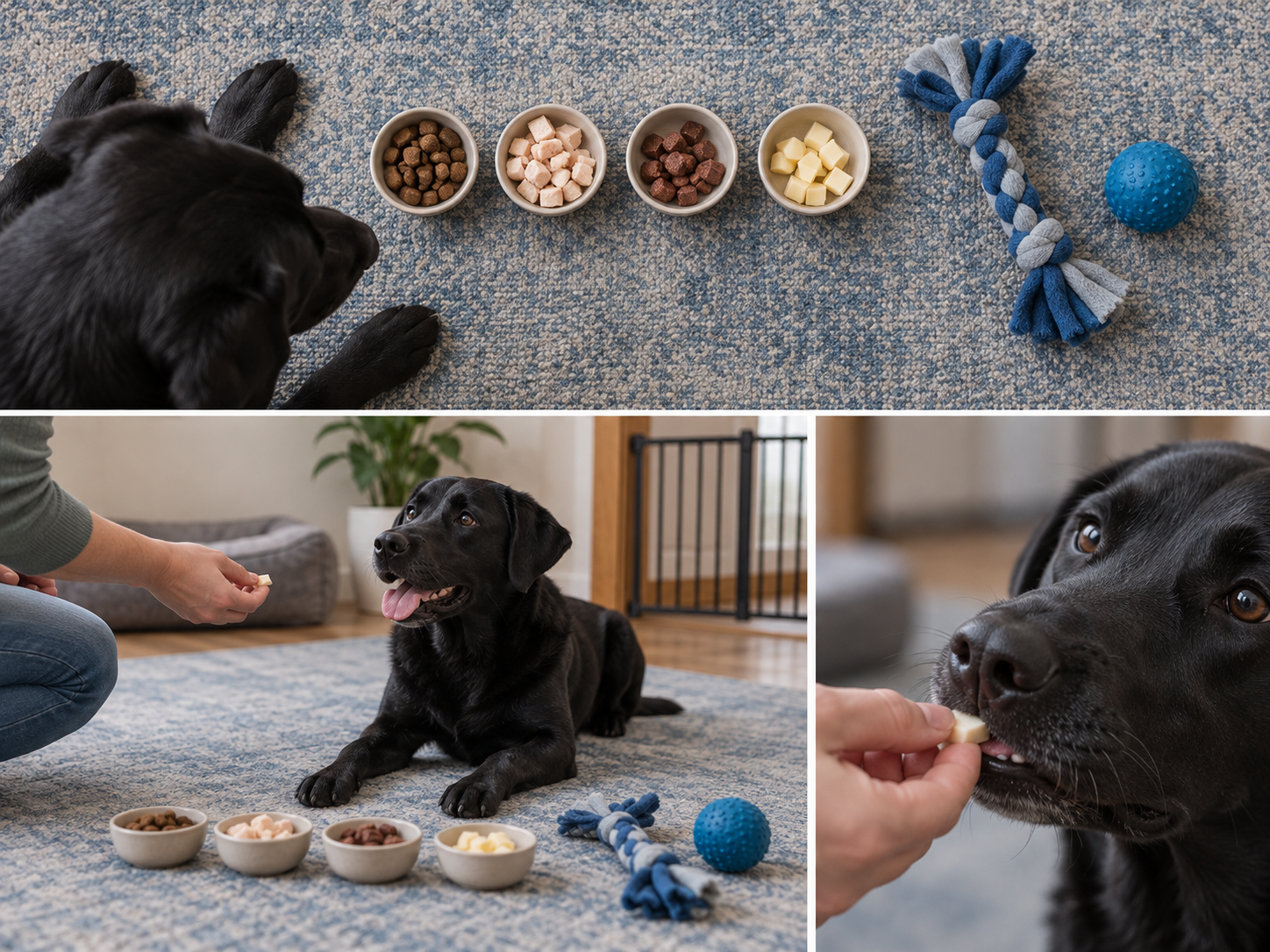
Build a short value list. Try ordinary kibble in a quiet room, softer food for a harder task, and play or access to the environment when those are safe. Save the highest-value options for genuinely difficult work. The American Kennel Club’s reward guidance notes that the environment competes with what the handler offers, so the reward and rate of reinforcement often need to increase around distractions.
If using food, keep pieces small and include them in the dog’s daily intake. Check ingredient safety, allergies, and veterinary diet restrictions. The point is frequent information, not a second dinner.
Mark the Exact Moment You Want
Choose a brief marker such as “yes” or use a clicker. First, establish that the marker predicts a reward: mark, then deliver food, several times in a calm place. The marker should come at the instant the desired action happens.
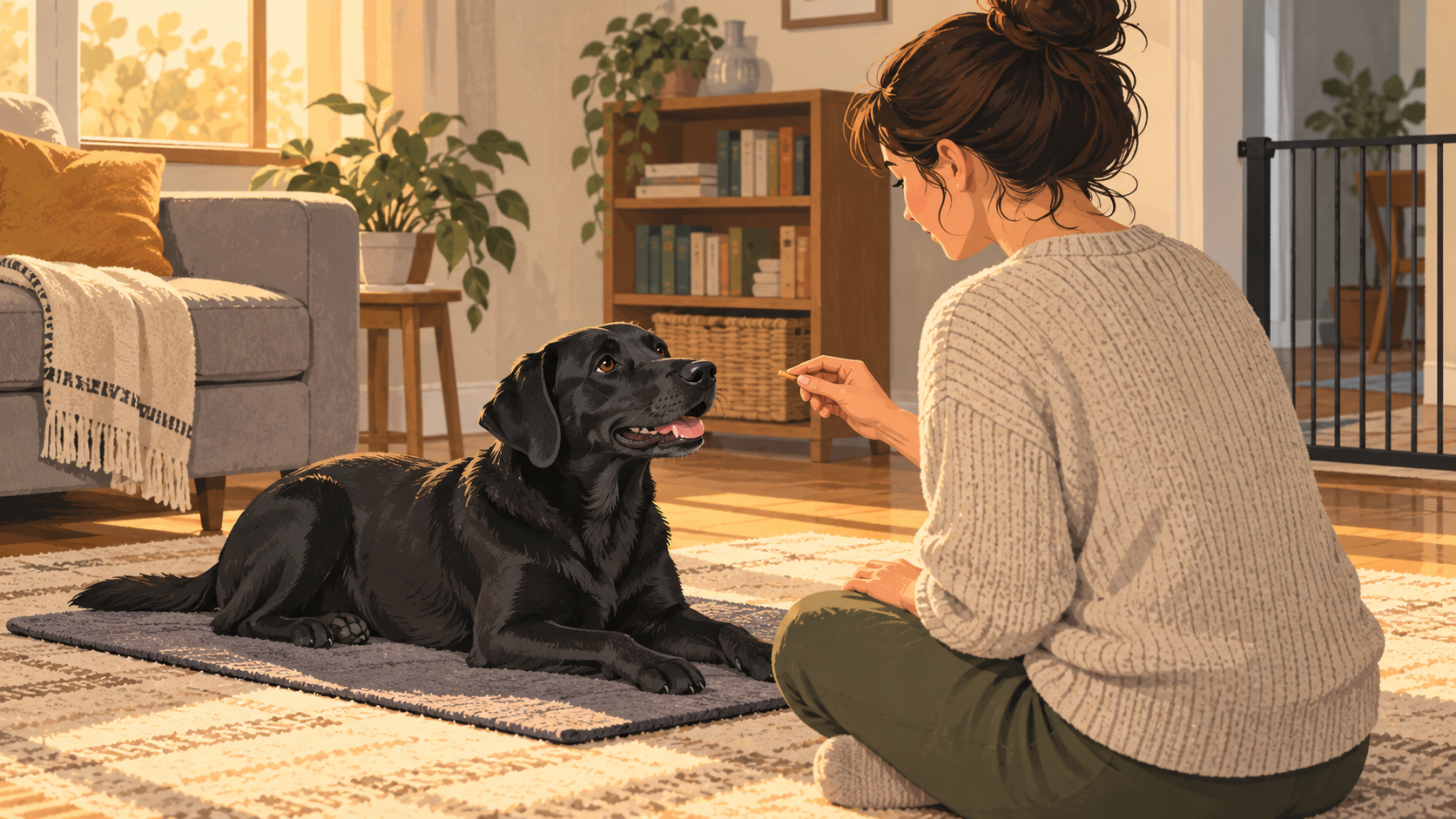
For a mat behavior, place the mat down and wait. When the dog looks at or steps toward it, mark and place a treat on the mat. Allow the dog to step away, then repeat. Do not keep pointing, pushing, or repeating “mat.” The early lesson is that interacting with the mat makes good things happen.
After the dog is deliberately moving onto the mat, raise the criterion gradually: first one paw, then two, then all four. Add the verbal cue only when the behavior is predictable. Saying a cue repeatedly before the dog understands it teaches that the word is background noise.
Run a Three-Minute Beginner Session
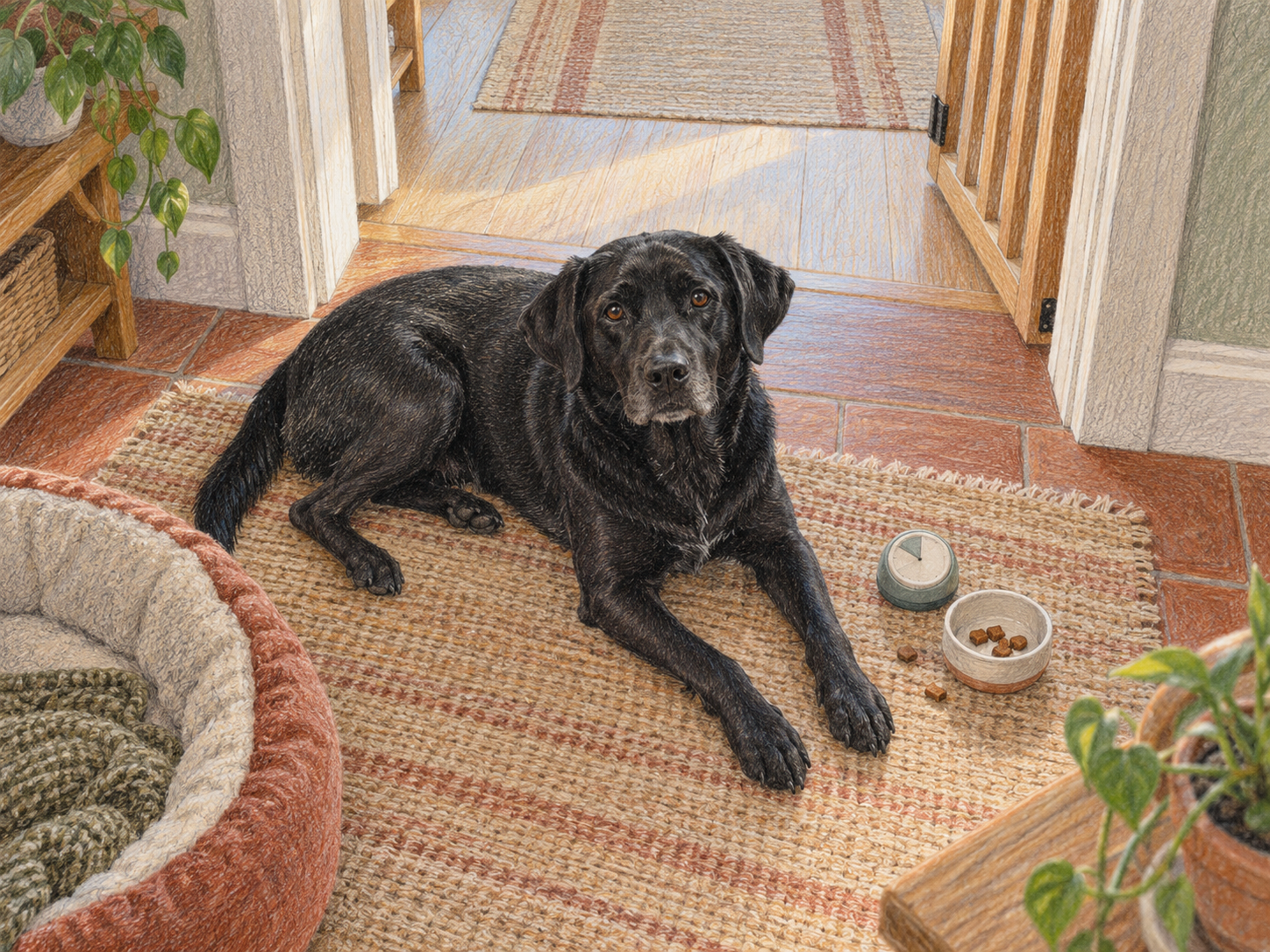
Use a timer if it helps you stop while the work is still easy. A productive three-minute session might contain six to ten repetitions, a brief pause, and a final easy success. The exact number matters less than the dog’s engagement.
Watch for a loose body, willingness to re-engage, and comfortable eating. Sniffing the floor, turning away, scratching, slowing down, grabbing food roughly, or wandering off can signal confusion, stress, fatigue, or a competing need. They do not justify scolding. Lower the criterion, improve the reward, take a break, or finish.
Reset between repetitions so the behavior can occur again. For the mat, toss one treat away after rewarding on the mat, then let the dog choose to return. For a sit, release the dog and take a step. A clean reset prevents you from rewarding a dog who has simply remained stuck in position.
Fix the First Week’s Common Problems
If the dog stares at the treat instead of thinking, hide the food in a pouch or behind your back and reward after the behavior. If the dog will not take food, check whether the environment is too difficult or the dog is unwell. Do not assume the dog is unmotivated.
If success falls below roughly half the attempts, simplify. Move to a quieter room, shorten the distance, reduce duration, or reward a smaller step. If the dog offers the behavior before the cue, that is useful information: the behavior is becoming strong, but cue control comes later.
Avoid luring forever. A lure can start a movement, but fade the visible food quickly by making the same hand motion with an empty hand, then rewarding from the other hand. Otherwise the dog may learn to follow food rather than respond to the cue.
A Seven-Day Practice Map
On days one and two, build easy repetitions in one quiet location. On day three, practice at a different time of day. On day four, move a few feet within the same room. On day five, add a mild distraction, such as another person sitting still. On day six, use the skill in a useful routine. On day seven, review notes and return to any weak step.
Keep sessions short and regular. End before either of you becomes frustrated. Reward-based training is not permissiveness: management still prevents unsafe choices, and criteria still become more demanding. The difference is that the dog learns what works without fear or physical force.
If a behavior involves panic, aggression, guarding, serious escape risk, or a sudden change from normal, pause the beginner plan. A veterinarian and an appropriately qualified behavior professional can determine what support is needed.
A Practical Quality Check
Before increasing difficulty in Reward-Based Dog Training: A Beginner's Guide, check the full picture rather than a single successful repetition. For Reward-Based Dog Training: A Beginner's Guide, the dog should be able to notice the cue or situation, perform the response without physical pressure, take the chosen reward if food is being used, and return to a relaxed baseline; write down the location, distraction level, number of clear successes, and any sign of hesitation. While evaluating Reward-Based Dog Training: A Beginner's Guide, that record makes it easier to separate a training gap from fatigue, fear, discomfort, or an environment that was simply too difficult.
Keep the article's central job in view: Turn principles into a seven-day starter routine with setup, session length, reward delivery, and stop rules. For Reward-Based Dog Training: A Beginner's Guide, rehearse the easiest useful version in ordinary life, then alter only distance, duration, distraction, or reward value—not all of them together; if performance drops twice, make the next attempt easier instead of repeating the same failed setup. While evaluating Reward-Based Dog Training: A Beginner's Guide, stop promptly for pain, panic, escape risk, aggression, or a sudden behavioral change, and use secure management while seeking appropriate professional help.