Dog training is not a contest of wills. It is a process in which behavior changes because the conditions around it change. Once you can see that process, conflicting advice becomes easier to judge: ask what happened before the behavior, what the dog did, and what happened immediately afterward.
The Learning Loop in Plain Language
Trainers often describe a sequence of antecedent, behavior, and consequence. The antecedent is the situation or cue that comes first. The behavior is the observable action. The consequence is what follows and changes the chance of that behavior happening again.
Suppose you pause with your hand on the kitchen door. Your dog places four paws on the floor. You open the door. The pause and door handle are the antecedent, standing calmly is the behavior, and access to the yard is the consequence. If calm feet reliably make the door open, calm feet become more likely there.
“Consequence” does not mean punishment. It simply means the result that follows an action. Reward-based training arranges results so safe, useful behavior pays off. AVSAB’s humane-training statement recommends reward-based methods and emphasizes teaching dogs what to do rather than relying on pain, fear, or intimidation.
One Kitchen-Door Example, Step by Step
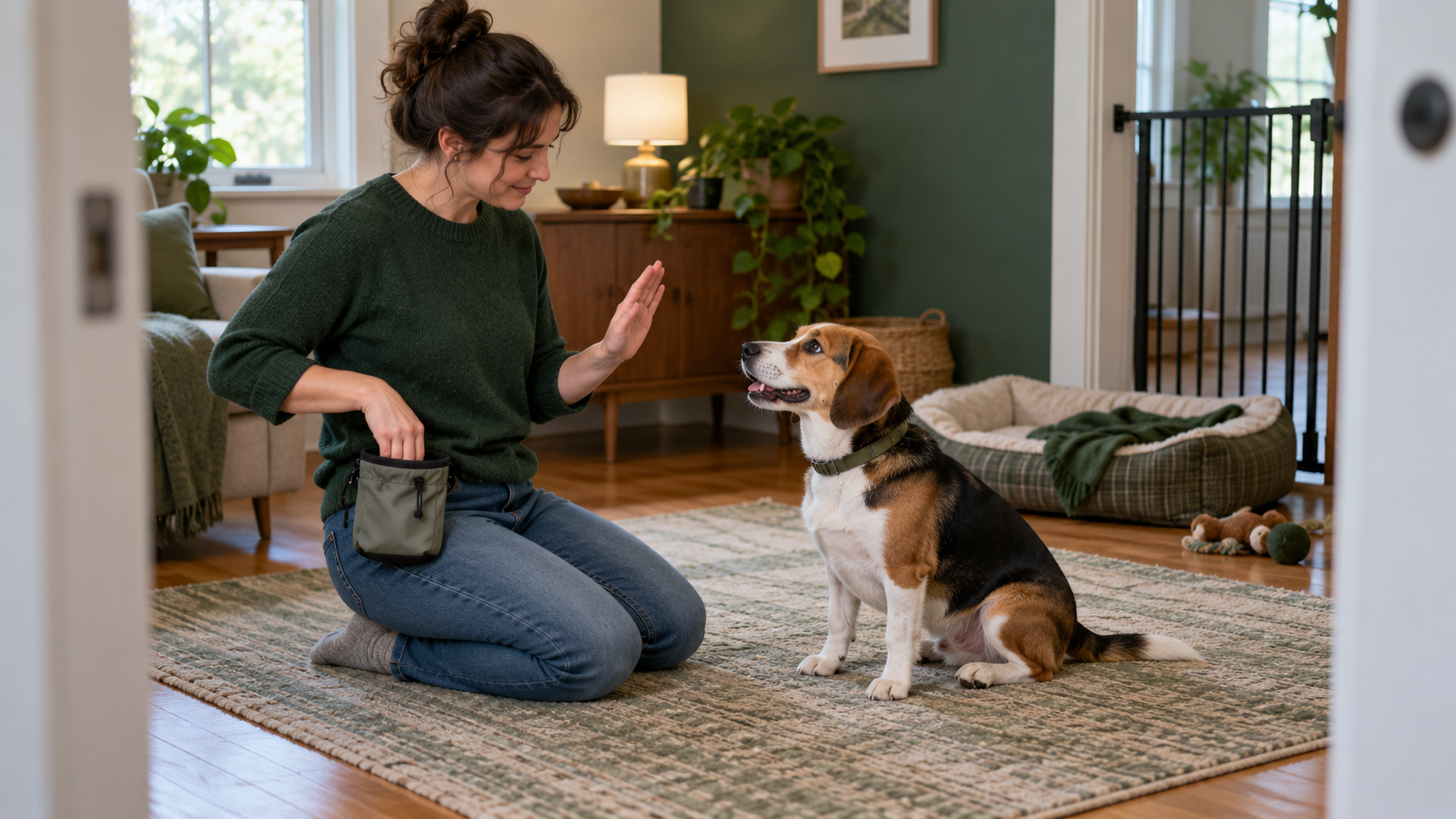
Begin with an easy version. Clip on the leash before approaching the door, keep the room quiet, and have small treats ready. Walk toward the door. If your dog rushes ahead, stop without jerking the leash. When the leash softens or all four paws return to the floor, mark that moment with “yes” and give a treat. Then move one step closer.
At first, opening the door may be too exciting to use as the only reward. Food keeps the lesson clear while you build the sequence. Later, the door itself can become part of the reward: calm behavior makes it open; surging makes it pause. If your dog cannot eat, respond to the marker, or disengage from the gap, the setup is too hard. Add distance, close the door, or practice touching the handle without opening it.
This is not a complete doorway-safety protocol. It is a small example of how environment and consequences shape learning.
Why Timing Changes the Lesson
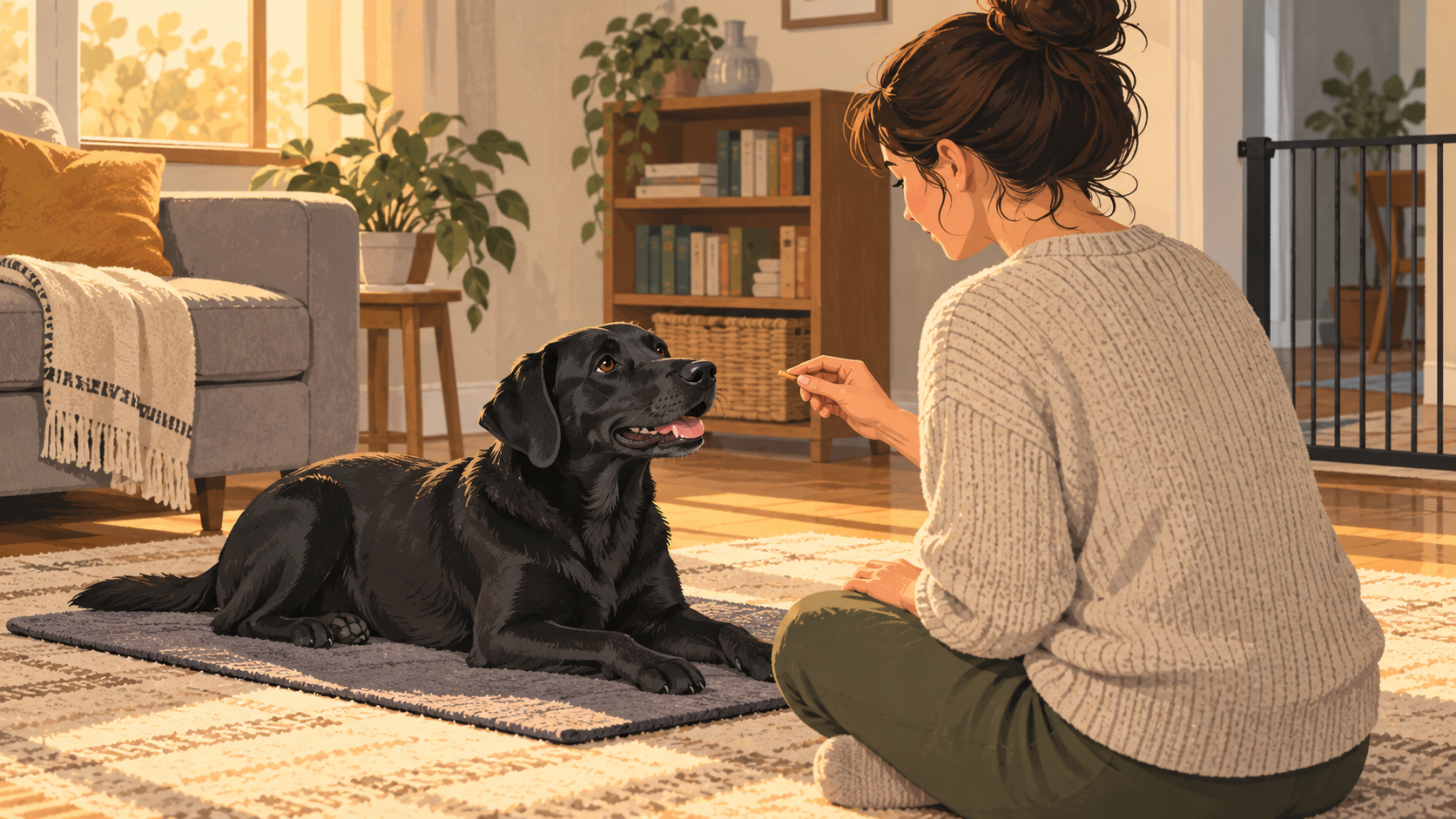
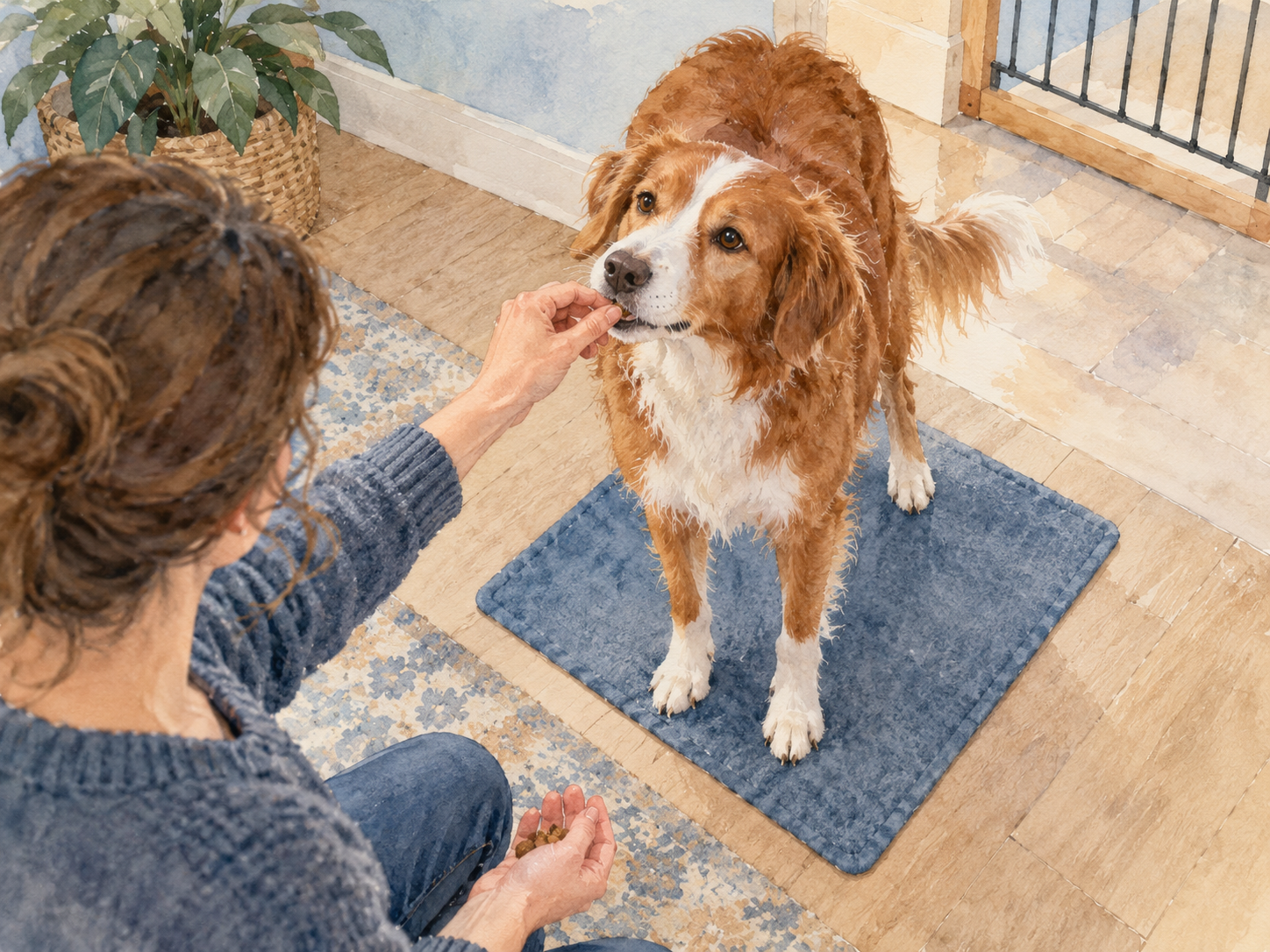
Dogs do not automatically know which action earned a result. If you mark a sit and then the dog jumps before the treat arrives, careless delivery can reward the jump. A marker word or clicker helps identify the exact moment, but it is not a remote control. The promised reward should still follow.
Placement matters too. Rewarding a stationary dog while the dog remains in position supports stillness. Tossing the treat several feet away resets the dog for another repetition but also creates movement. Either choice can be useful when it is deliberate.
Look at the rate of successful repetitions. A learner getting one reward every two minutes may not have enough information to solve a new problem. A learner earning several clear rewards in a short, easy session can detect the pattern. When errors multiply, do not repeat the cue louder. Make the next repetition simpler.
Set Up the Environment Before You Cue
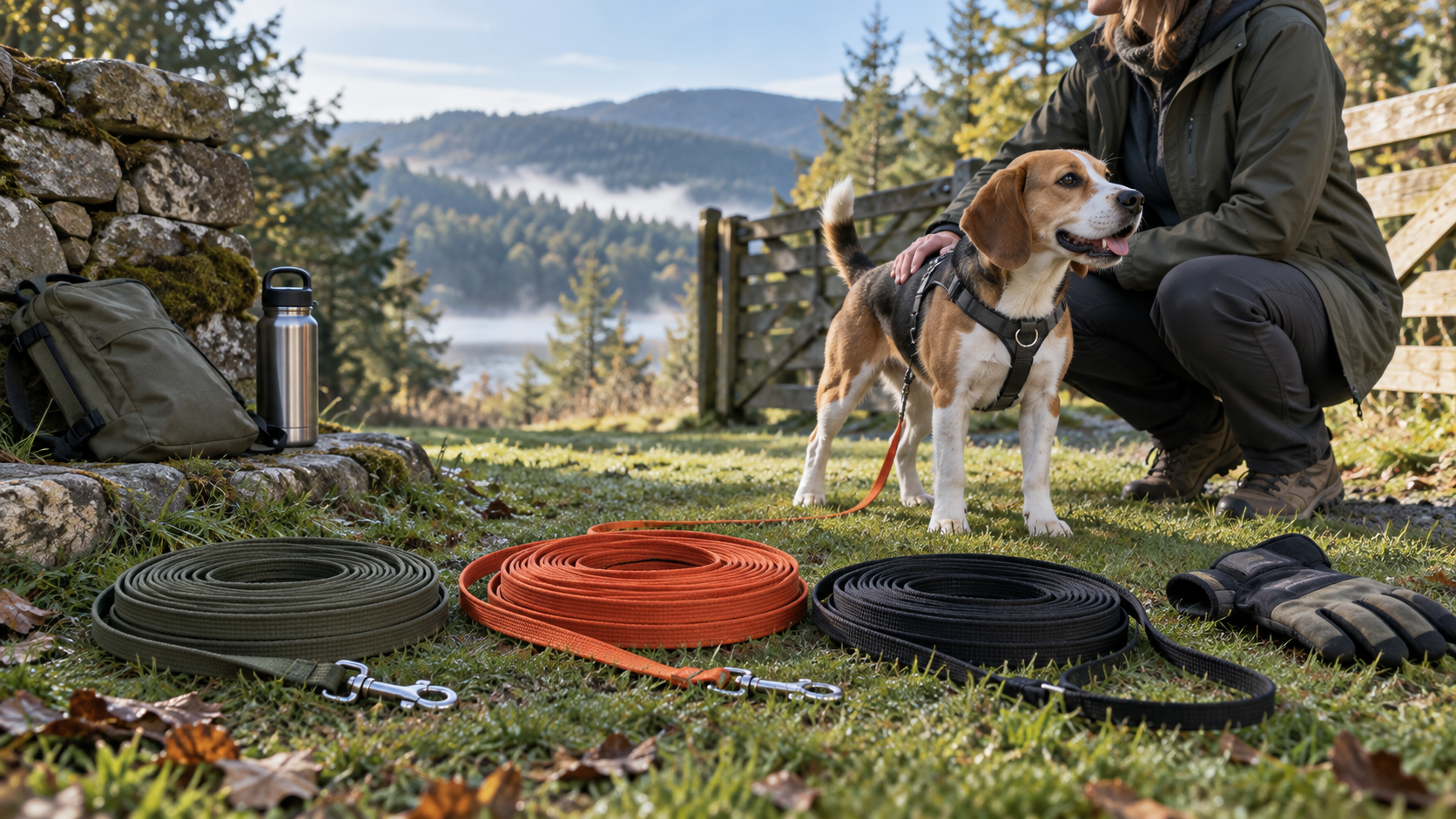
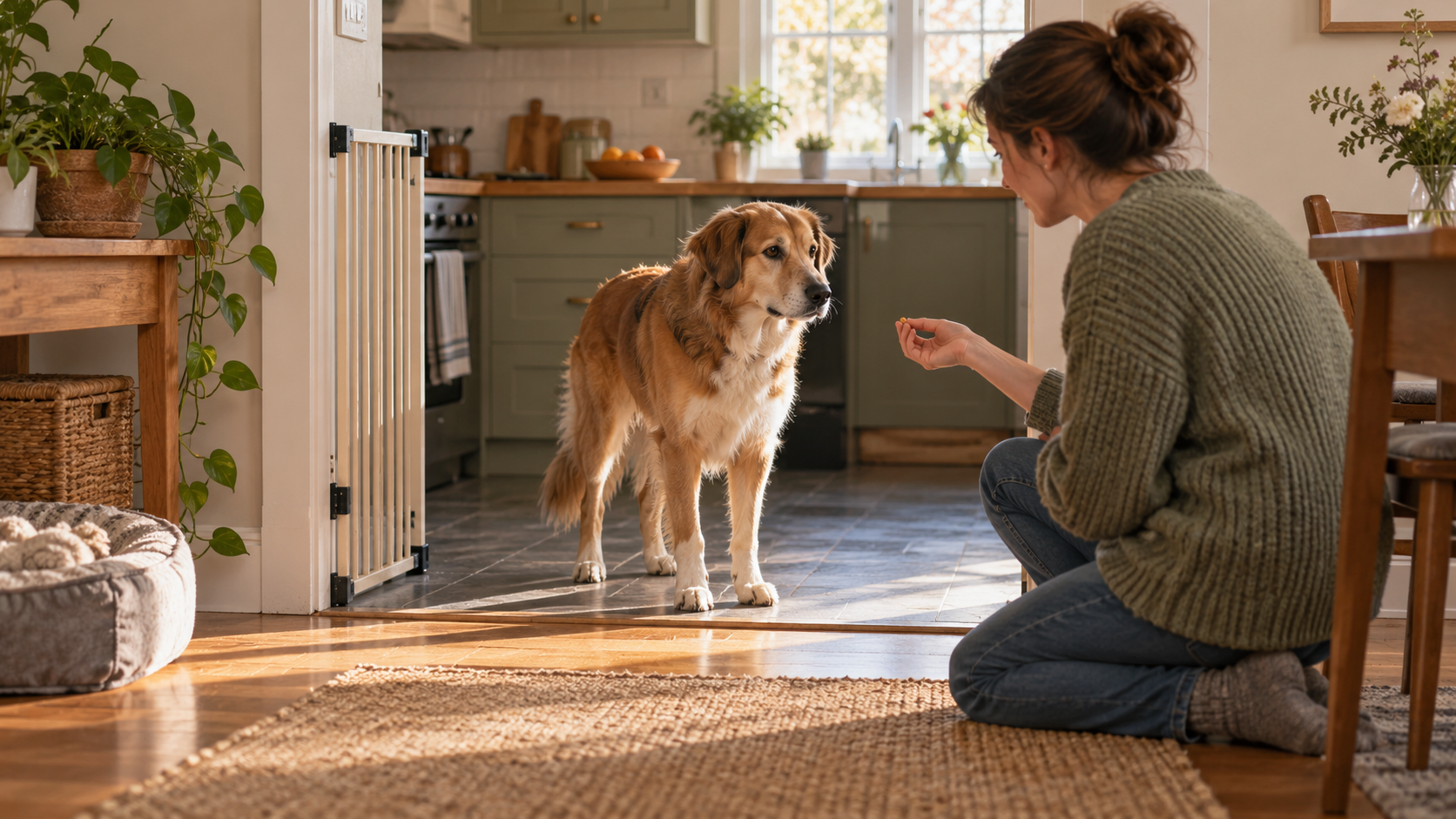
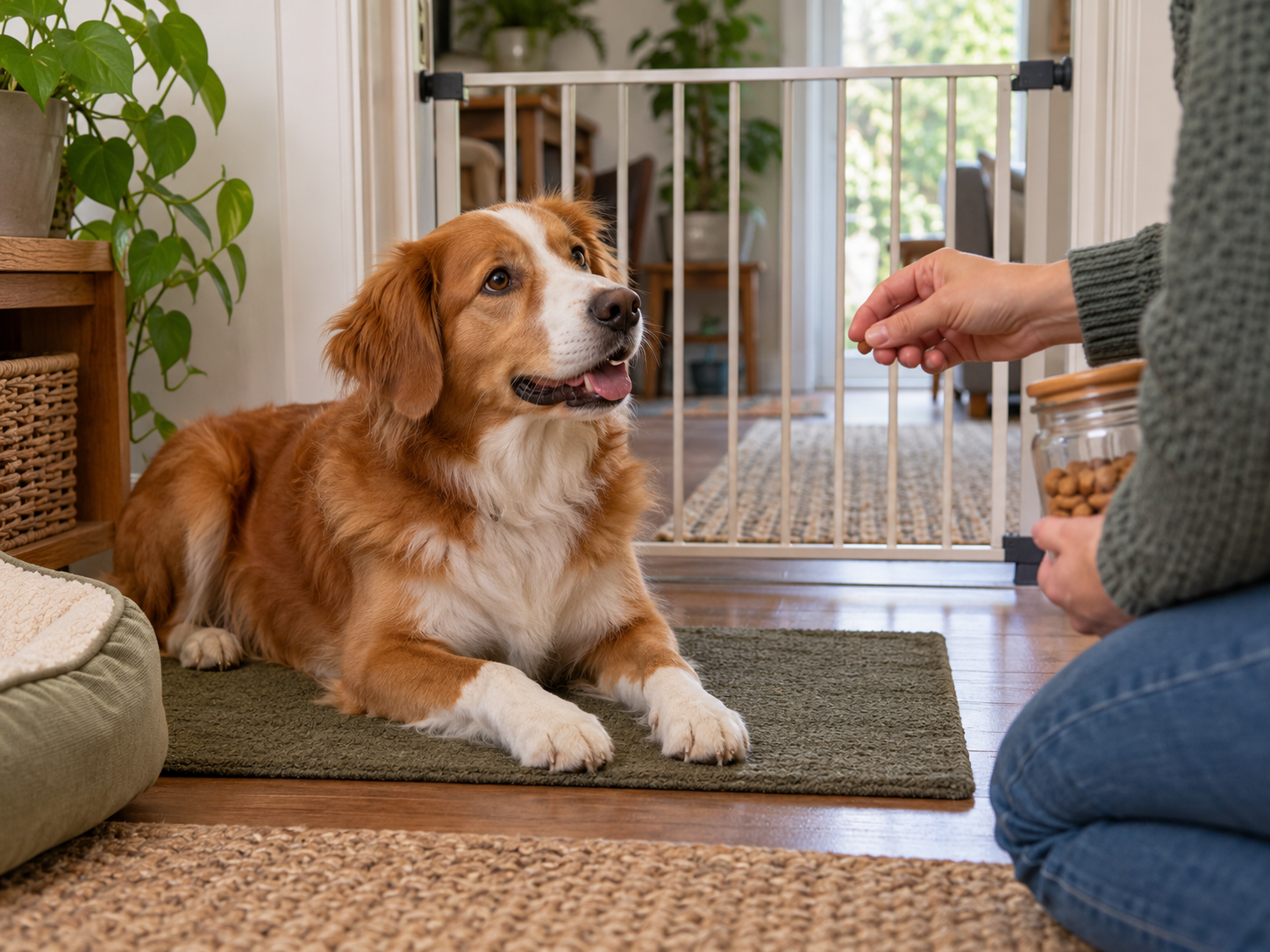
Good training often looks like preparation rather than command giving. Put tempting shoes away while teaching what belongs in a toy basket. Use a gate while rehearsing calm visitor routines. Practice recall on a long line attached to a well-fitted harness instead of gambling on an unfenced field.
Management prevents unwanted behavior from being rehearsed and protects everyone while a replacement skill develops. It is not proof that training has failed. A dog who can settle while a delivery person remains outside may not yet be ready to greet that person in the hallway.
Also check physical and emotional needs. Pain, illness, fear, lack of rest, and overwhelming stimulation can all change behavior. Training cannot make an unsafe or painful setup fair. A sudden behavior change, persistent distress, or aggression warrants veterinary advice before you increase training pressure.
Read Progress Without Expecting Perfection
Measure what you can observe. Instead of “more obedient,” track whether the dog responds to one cue, how close a distraction can be, how long the behavior lasts, and how quickly the dog recovers after a mistake. Change only one difficulty at a time: distance, duration, or distraction.
Learning is context-sensitive. A sit learned in the kitchen is not automatically fluent beside a playground. The dog is not being stubborn when the picture changes; the cue, surface, smells, movement, and reward history have changed too. Rebuild the behavior in easier versions of each new context.
Progress may look uneven. A dog can perform well after sleep and struggle at the end of a busy day. Keep brief notes so one difficult walk does not erase evidence of improvement, and one excellent repetition does not justify removing every safety measure.
When a Learning Model Is Not Enough
The learning loop explains how behavior is maintained, but it does not diagnose why a dog is distressed. Barking can serve different functions. Freezing can reflect fear, pain, or conflict. Destruction during an absence may be boredom, incomplete house training, or separation-related panic. Similar-looking behavior can require very different plans.
Use a qualified reward-based trainer for ordinary skill building and mild training problems. Involve a veterinarian when behavior changes suddenly, pain may be present, or anxiety is severe. Aggression, repeated escape attempts, self-injury, panic during absences, or danger to children and other animals calls for individualized professional help.
The most useful question is not “How do I make my dog obey?” It is “What is my dog learning from this setup, and how can I make the safe choice easier?” That question turns training from a power struggle into a repeatable, observable process.
A Practical Quality Check
Before increasing difficulty in How Dog Training Really Works, check the full picture rather than a single successful repetition. For How Dog Training Really Works, the dog should be able to notice the cue or situation, perform the response without physical pressure, take the chosen reward if food is being used, and return to a relaxed baseline; write down the location, distraction level, number of clear successes, and any sign of hesitation. While evaluating How Dog Training Really Works, that record makes it easier to separate a training gap from fatigue, fear, discomfort, or an environment that was simply too difficult.
Keep the article's central job in view: Explain antecedents, behavior, consequences, timing, and repetition through one ordinary household example. For How Dog Training Really Works, rehearse the easiest useful version in ordinary life, then alter only distance, duration, distraction, or reward value—not all of them together; if performance drops twice, make the next attempt easier instead of repeating the same failed setup. While evaluating How Dog Training Really Works, stop promptly for pain, panic, escape risk, aggression, or a sudden behavioral change, and use secure management while seeking appropriate professional help.