Best Long Lines for Recall Training: A Safety-First Guide is a desk-researched shortlist built for practical decision-making, not a record of hands-on product testing. For Best Long Lines for Recall Training: A Safety-First Guide, the selection method is explicit: rank by use case with explicit safety exclusions and no hands-on claims; manufacturer pages provide primary specifications, while independent comparisons help identify questions worth checking. While evaluating Best Long Lines for Recall Training: A Safety-First Guide, because products, prices, and availability change, verify the linked information before buying.
How the Long Lines Were Selected
Selection is based on published specifications and use cases rather than hands-on testing. Product dimensions and hardware can change, and no long line is safe for every dog, handler, or location.
The shortlist uses published material, length, hardware, and care information plus an independent comparison; it is not a hands-on durability test. For How the Long Lines Were Selected, lines intended for open-field recall were prioritized, while retractable leads and setups for roadside use were excluded; current specifications must be rechecked because makers can change clips or available lengths. While evaluating How the Long Lines Were Selected, handler skill, dog size, terrain, and safe space matter more than a simple first-to-third ranking.
Safety Criteria Before Product Features
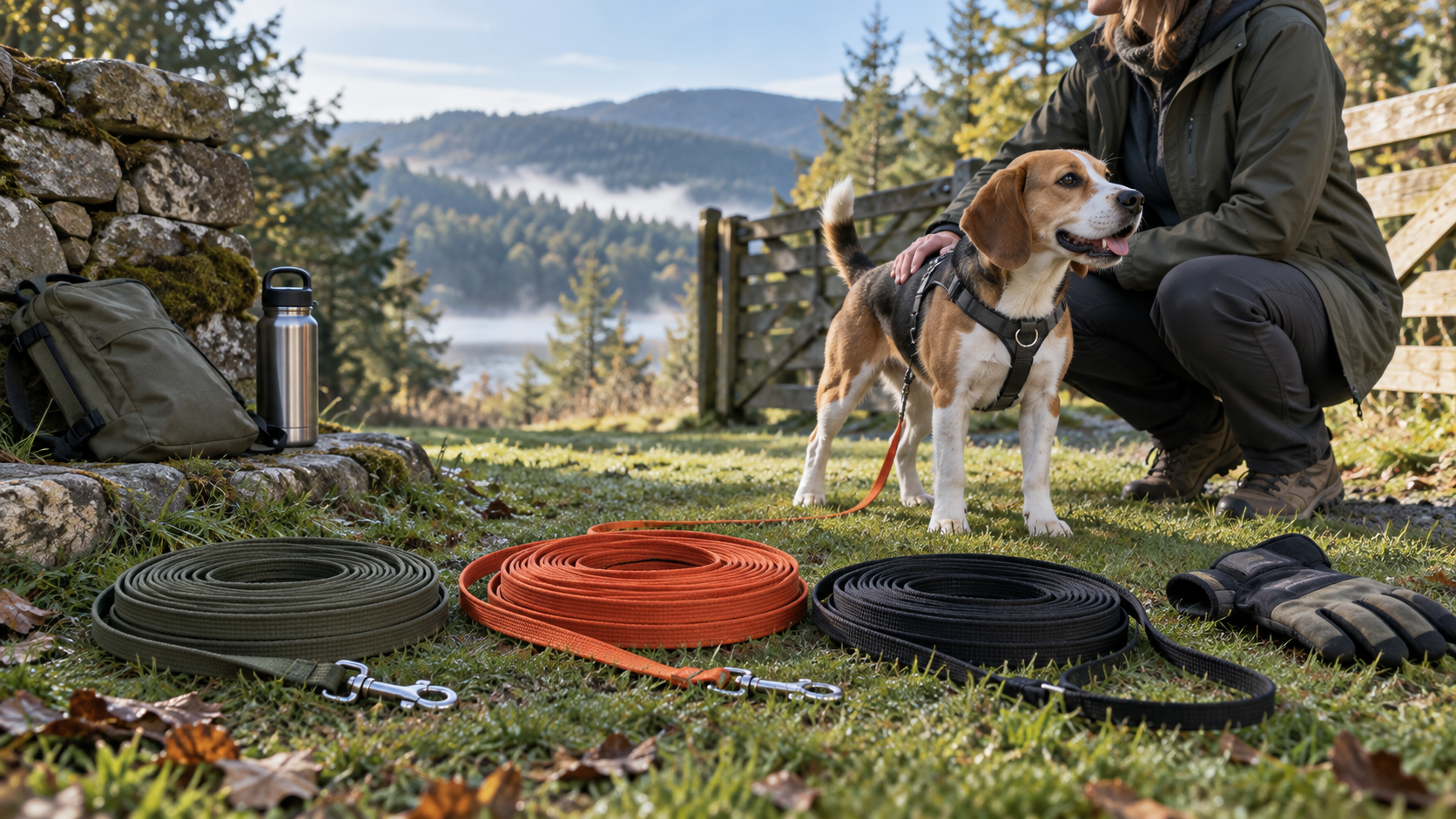
Before comparing materials, choose an open area away from traffic, attach to a suitable harness, wear protective footwear, and keep the line out from under people and dogs. Never wrap it around a hand or body.
Safety precedes material preference. For Safety Criteria Before Product Features, a long line should attach to a suitable harness, remain clear of necks and limbs, and be handled without wrapping it around the hand or body; thin material can burn skin, heavy hardware can affect a small dog, and excessive length allows dangerous speed to build. While evaluating Safety Criteria Before Product Features, choose an open area away from traffic and bystanders, wear practical footwear, and learn to feed and gather the line before adding recall distractions.
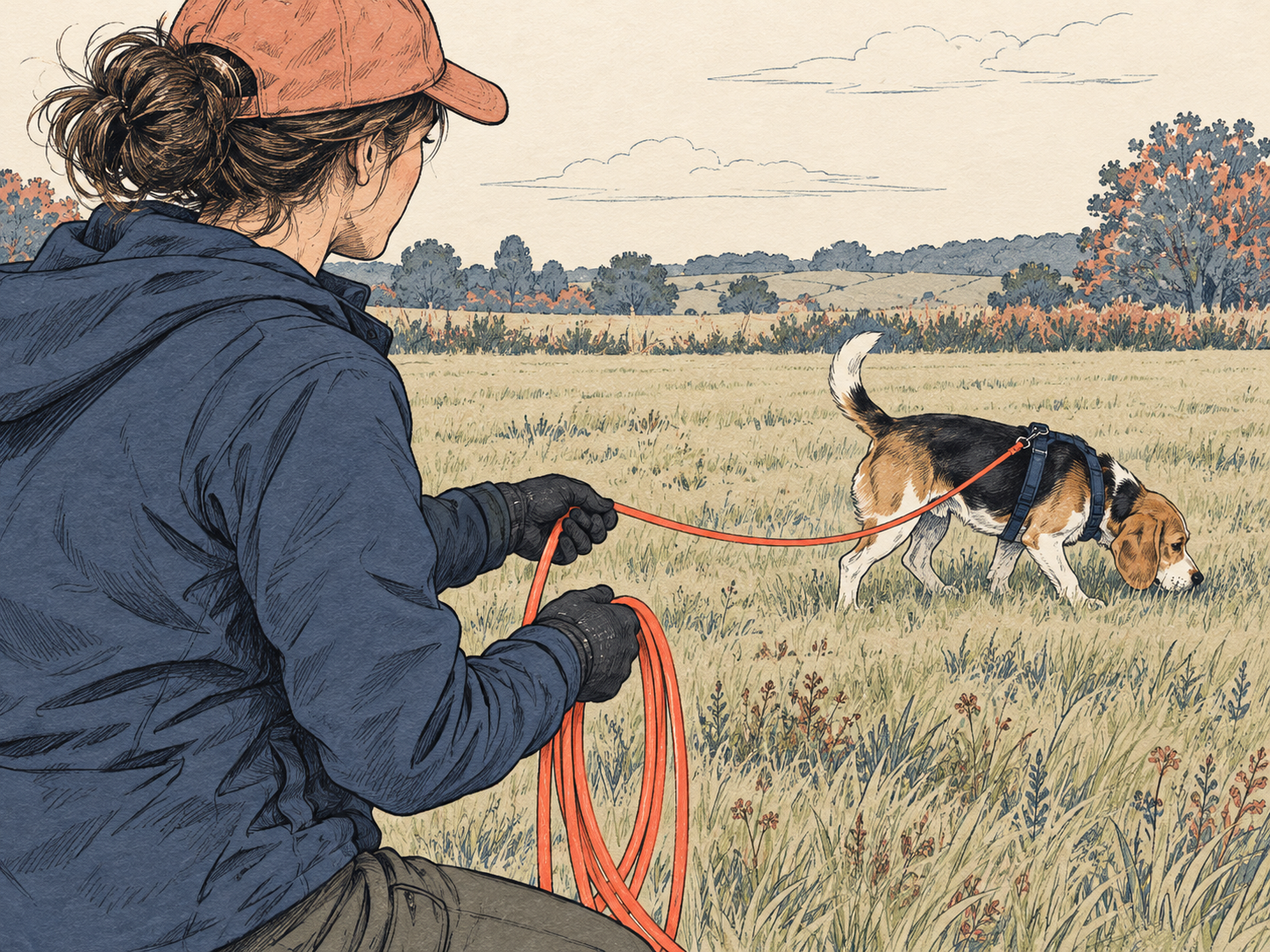
Best Easy-Clean Option: Palomine BioThane
Palomine's BioThane lines are positioned as waterproof, easy-clean options in multiple configurations. That surface suits mud and wet grass, although width, grip, hardware, and length should be matched to the team.
Palomine's BioThane option is the easy-clean pick because the maker describes coated webbing designed to resist water and wipe down after muddy use. For Best Easy-Clean Option: Palomine BioThane, verify the selected width, length, clip, handle configuration, and weight, since those details affect grip and the dog; a smooth waterproof surface can be convenient in wet fields but may feel slippery to some handlers. While evaluating Best Easy-Clean Option: Palomine BioThane, gloves and a shorter length may be sensible while technique is still developing.
Best Rope Option: Mendota Check Cord
Mendota check cords use rope construction familiar to field and outdoor work. Rope can offer a different hand feel and flexibility, but buyers should consider water retention, abrasion, tangling, and glove use.
Mendota's check cords represent the rope option, a familiar format for field and outdoor handling. For Best Rope Option: Mendota Check Cord, rope can offer flexible handling and a distinct grip, but it may absorb water, collect grit, tangle, or cause friction depending on construction and use; check the current diameter, hardware, available lengths, and care instructions. While evaluating Best Rope Option: Mendota Check Cord, this pick suits someone who already prefers rope feel and accepts its maintenance, not a universal upgrade over coated or flat webbing.
Best Entry-Level Material Choice
For an entry-level purchase, a straightforward webbing line can be economical and easy to replace. Inspect stitching and hardware, avoid very thin material that burns hands, and choose visibility suited to the terrain.
A basic flat-webbing line can be the entry-level material choice because it is widely available and usually economical. For Best Entry-Level Material Choice, inspect stitching, clip security, edge finish, width, and visibility rather than shopping on price alone; very narrow webbing may be hard on hands, while a bulky line may drag heavily for a small dog. While evaluating Best Entry-Level Material Choice, replace it after fraying, damaged stitching, corrosion, or a clip that no longer closes positively.
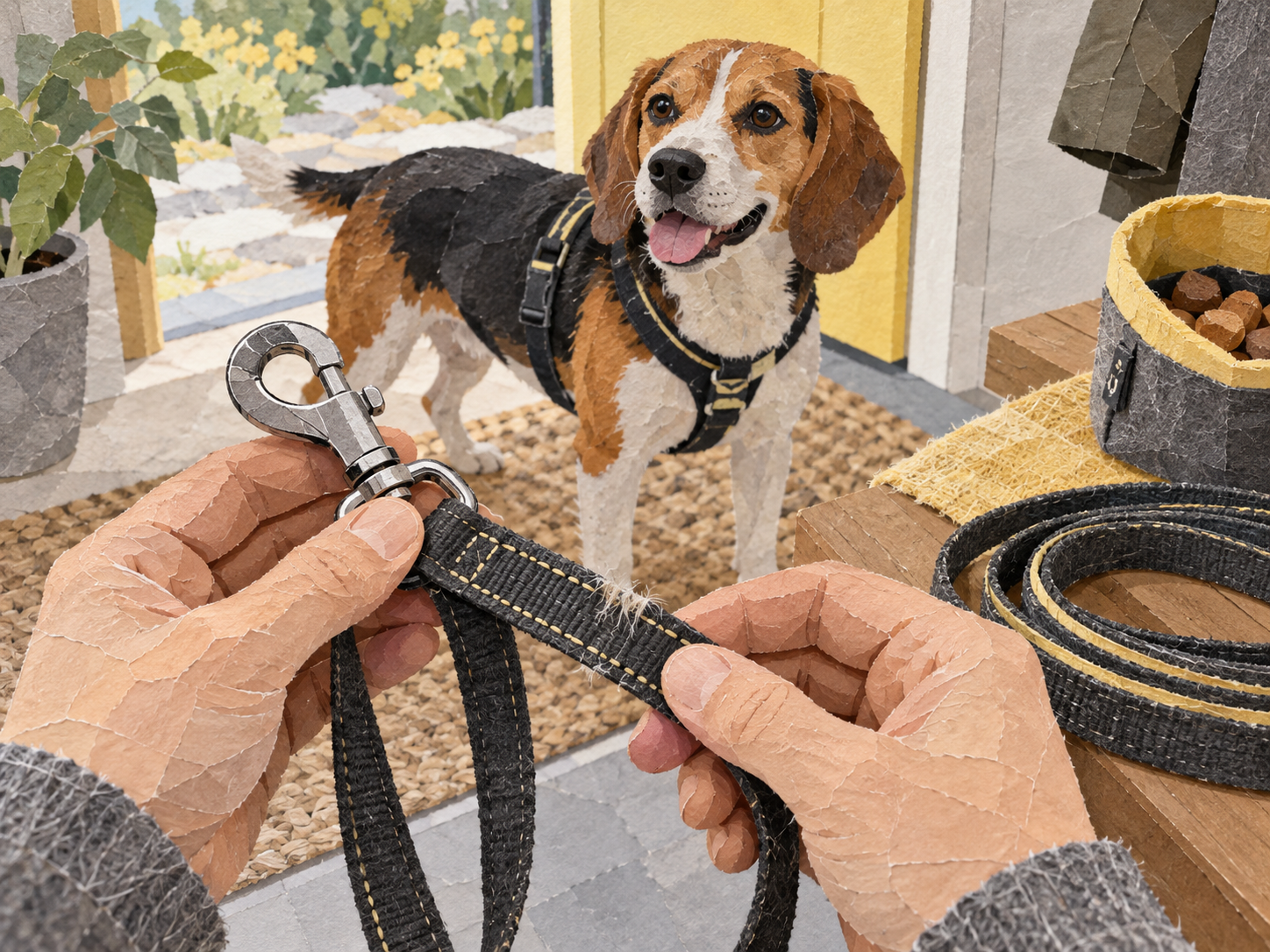
Length, Hardware and Handler Skill
More length creates more freedom and more potential speed, tangles, and handling demand. Hardware should be secure without being disproportionately heavy, and the handler should practice feeding and gathering line before adding distractions.
Length increases both freedom and handling demand. For Length, Hardware and Handler Skill, a shorter line is easier in small spaces; a longer one can support distance work only where the area is clear; hardware needs to be secure without being disproportionately heavy, and a handle can become a snag point in vegetation. While evaluating Length, Hardware and Handler Skill, match the line to the dog and terrain, then practice changing length smoothly; do not choose maximum length simply because it appears more advanced.
Use a Long Line Without Creating Hazards
Keep a soft bend in the line, move with the dog, and prevent a high-speed impact at the end. A long line is temporary safety management while recall develops, not permission to train beside roads or crowded play.
Use a long line with a soft curve rather than constant tension, and move with the dog so the line never produces a high-speed stop. For Use a Long Line Without Creating Hazards, keep it visible, prevent it crossing people or dogs, and shorten it before paths, entrances, or wildlife encounters; reward the return and often release the dog back to safe exploration. While evaluating Use a Long Line Without Creating Hazards, the line is temporary management while recall is learned; it cannot make an unsafe roadside or crowded space suitable.
The Practical Takeaway
The best choice from Best Long Lines for Recall Training: A Safety-First Guide is the one whose verified features match the intended use and whose drawbacks are manageable. For Best Long Lines for Recall Training: A Safety-First Guide, set two or three priorities, compare current specifications on the same basis, and inspect the item before every safety-critical use; no product rank replaces supervision, gradual introduction, humane training, or a suitable environment.
Final Buying Checklist
Before buying from Best Long Lines for Recall Training: A Safety-First Guide, open the current product page and record the exact model, size, material, hardware, care method, included parts, price, delivery terms, and return policy. For Best Long Lines for Recall Training: A Safety-First Guide, write the real use case in one sentence: where it will be used, for how long, with what food or equipment, and under whose supervision; keep the selection logic visible: Rank by use case with explicit safety exclusions and no hands-on claims. While evaluating Best Long Lines for Recall Training: A Safety-First Guide, eliminate any option whose published limits, dimensions, or safety requirements conflict with that use rather than hoping the mismatch will be solved after purchase.
On arrival, compare the item with the ordered specification, inspect seams, closures, edges, and removable parts, and introduce it during an easy supervised session. For Best Long Lines for Recall Training: A Safety-First Guide, keep packaging until fit and handling are clear; recheck the product regularly for wear, trapped food, cracks, loosened hardware, or a change in how the dog moves or interacts with it. While evaluating Best Long Lines for Recall Training: A Safety-First Guide, stop using it if damage or the dog's behavior creates a swallowing, entanglement, escape, rubbing, or impact hazard; these checks matter more than a small difference in ranking.