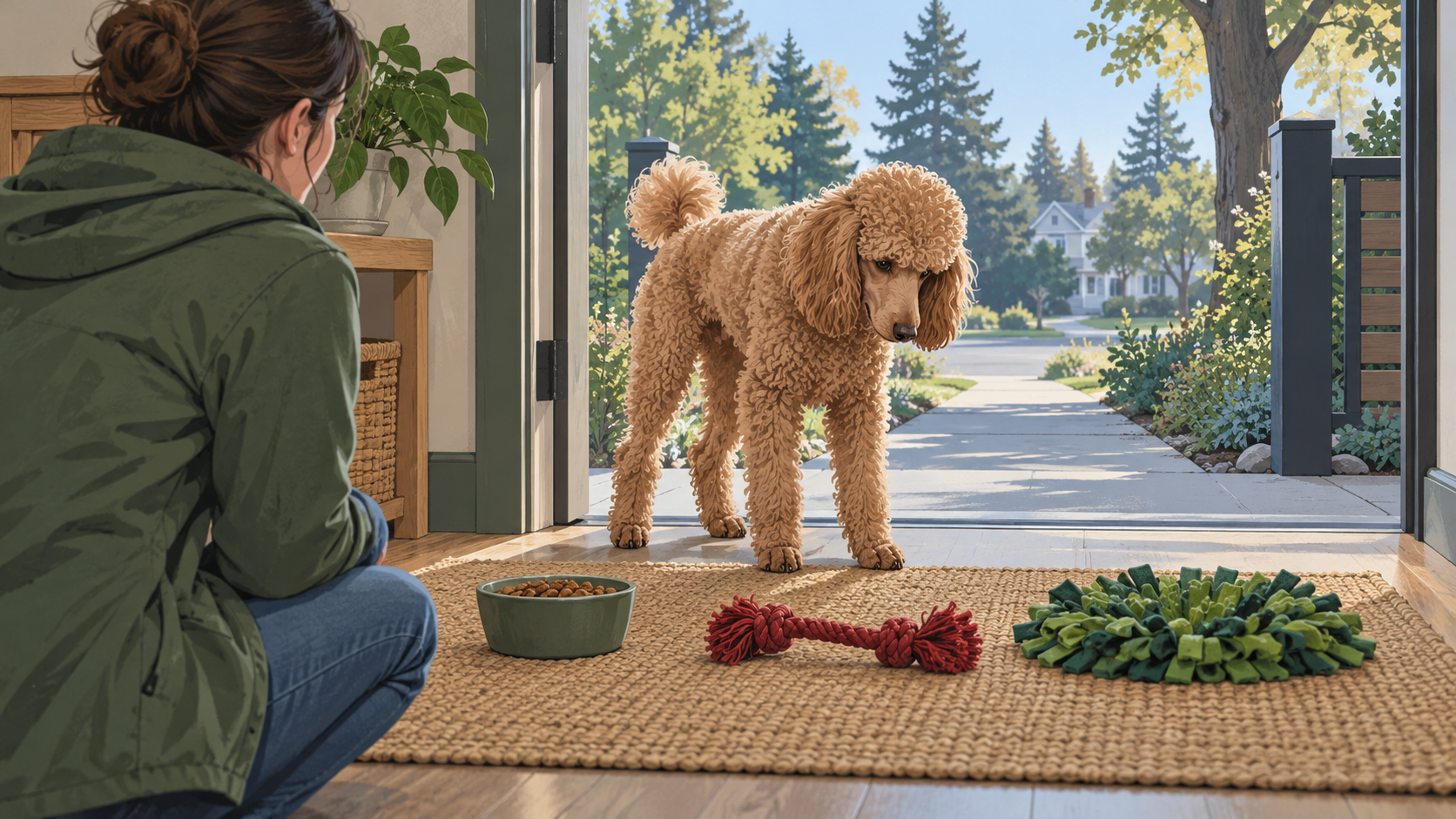
A dog who responds beautifully in the kitchen and seems to forget everything outdoors has not exposed a secret stubborn streak. The context changed. Smells, movement, distance, surfaces, sounds, and opportunities compete with a cue that has a much shorter history.
Outside Is a Different Learning Context
Dogs do not generalize as broadly as people expect. “Come” beside the refrigerator and “come” while watching a squirrel are different problems. The outdoor version requires practice in graduated settings, not louder repetition.
The environment also rewards behavior directly. Pulling may reach a smell. Staring may keep an interesting dog in view. Ignoring the handler may preserve access to exploration. Your reward must compete with those outcomes, and management must prevent dangerous choices from paying off.
Start by separating two goals: giving the dog appropriate time to explore and practicing a specific skill. A walk does not need to be a thirty-minute obedience test. Planned sniffing can improve cooperation because the environment is no longer permanently forbidden.
Find the Point Where Your Dog Can Think
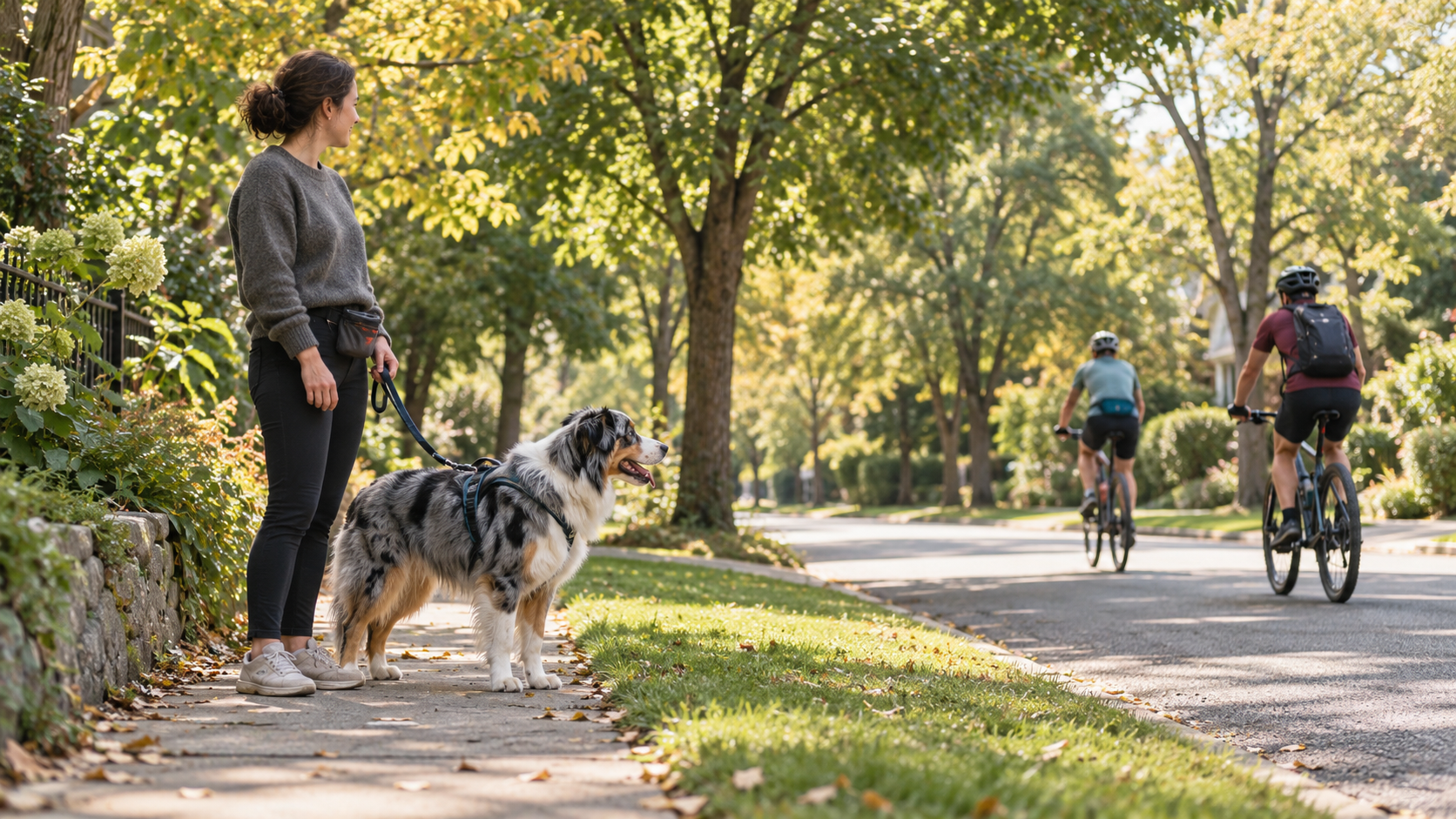
Work below the level at which the dog loses the ability to respond. If your dog can notice another dog at forty feet, eat, and turn back to you, that distance may be workable. At fifteen feet, freezing, lunging, or refusing food suggests the setup is too hard.
Distance is a training tool. Cross the road, step behind a parked car, or leave the area before the dog becomes overwhelmed. Moving away does not reward fear or prove failure; it restores conditions in which learning is possible.
Use observable checks. Can the dog take food gently? Respond to a familiar name cue? Move with a loose body? Recover within seconds? If not, increase distance or reduce the distraction.
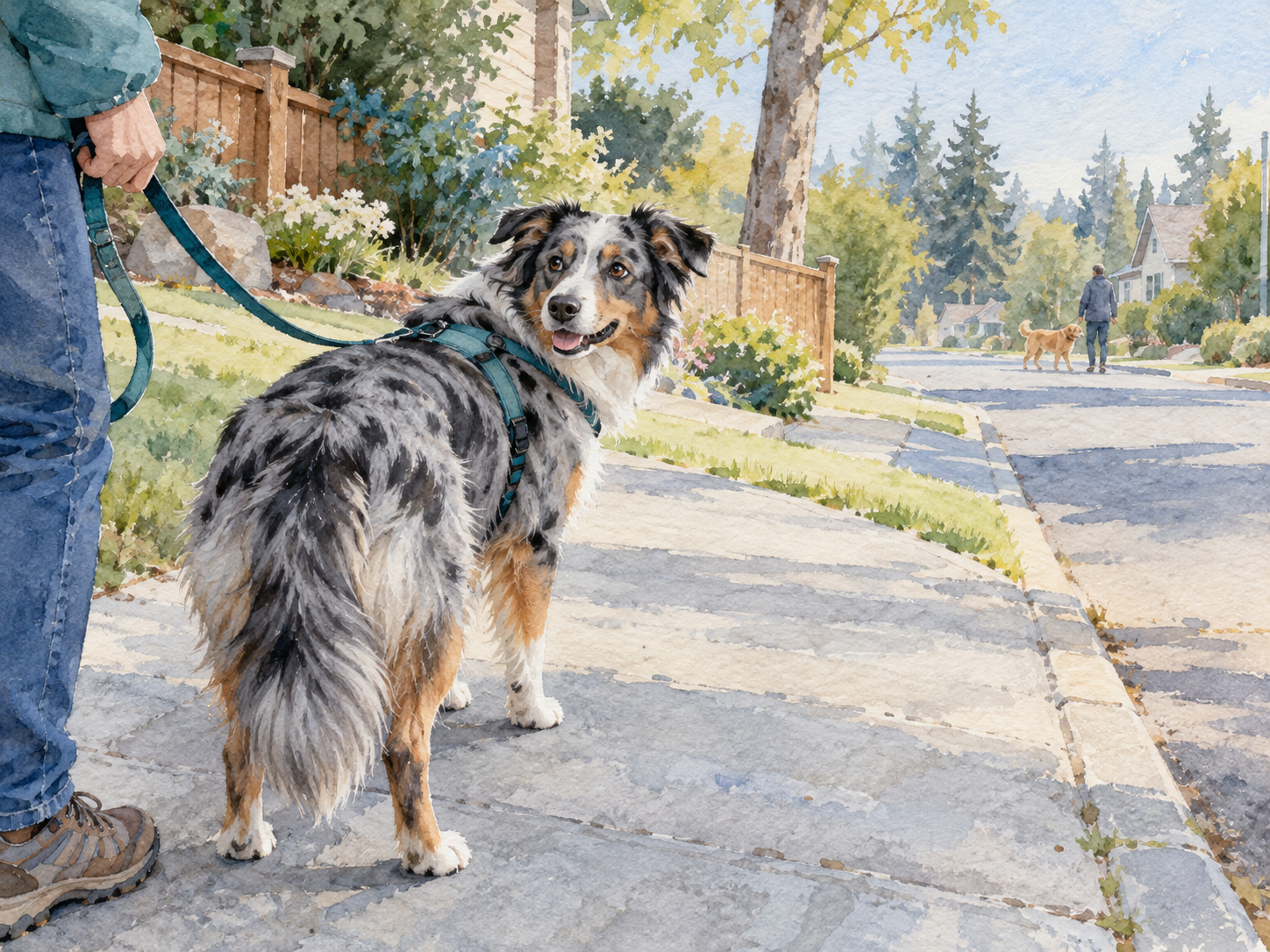
Balance Distance, Distraction, and Duration
Change one variable at a time. Practice a two-second check-in near the open front door before asking for a minute on the sidewalk. Work farther from the playground before approaching. Keep early outdoor sessions short.
The same principle applies to cues. A stay becomes harder if you step away, wait longer, or add movement nearby. Increasing all three invites failure. Return to a version the dog can perform, then make one small change.
Weather and time matter too. A quiet morning street and a busy evening street are different classrooms. Begin when conditions are predictable and record what worked.
Upgrade Reinforcement Without Bribing
Bring rewards out before you need them, but present them after the desired behavior. Use small, high-value food, a favorite toy, or access to sniffing. The AKC notes that environmental rewards compete with handler-provided rewards; difficult contexts often require a higher rate and value.
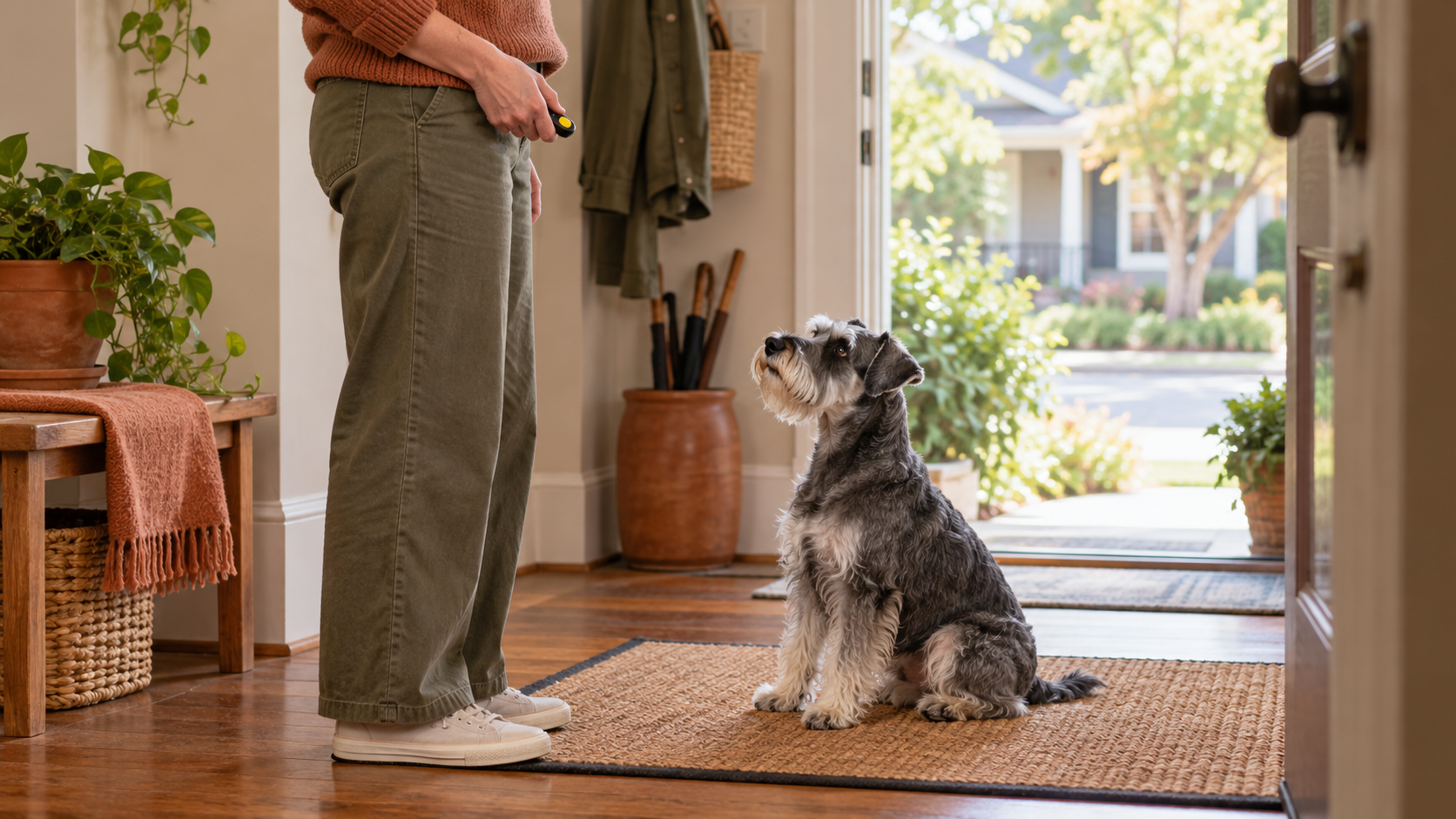
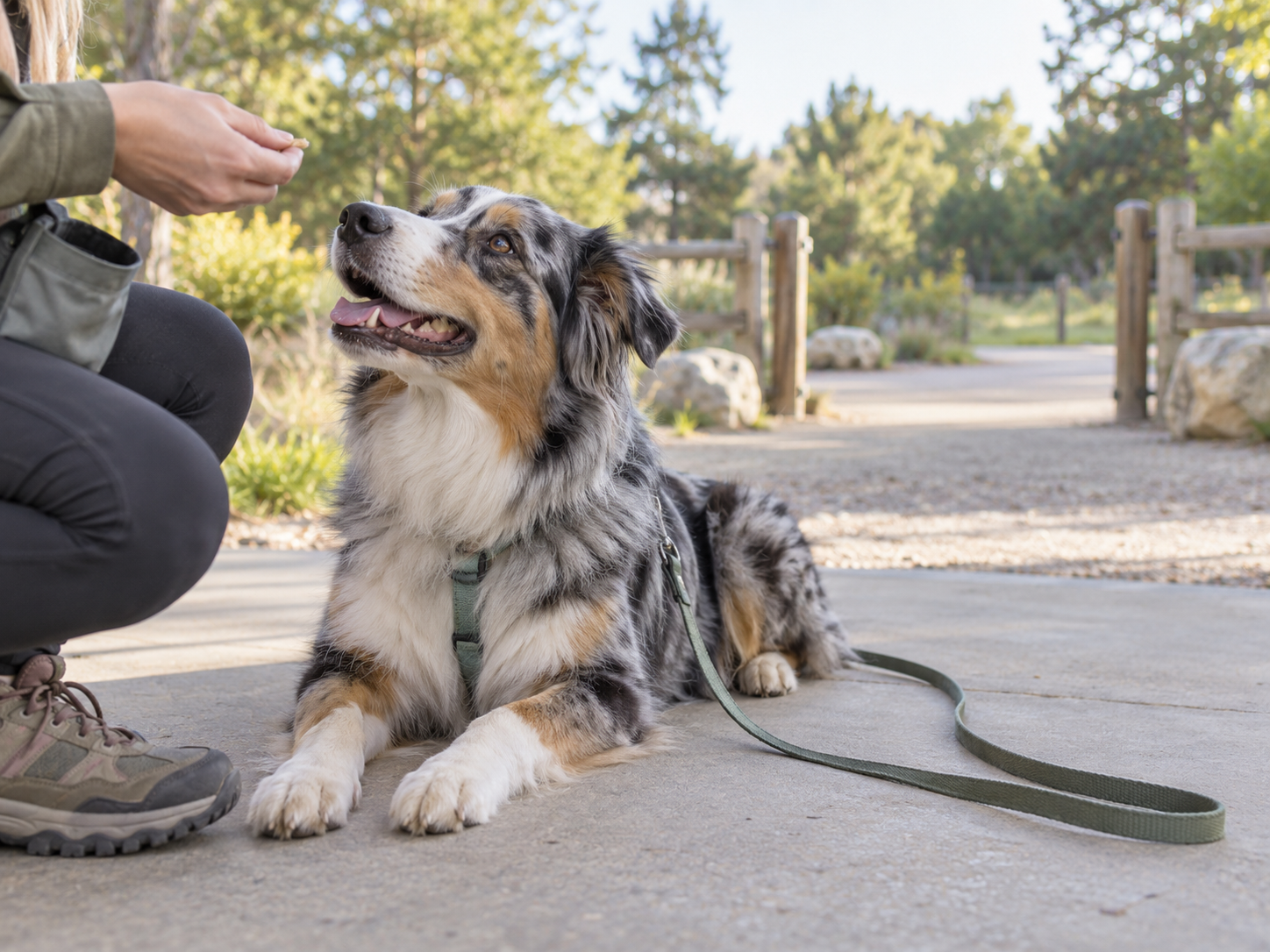
For a check-in, mark the glance and feed beside your leg. Then release the dog with “go sniff” and move toward a safe scent. For recall practice, reward the return generously and sometimes release the dog back to exploration. Coming to you should not always end the fun.
If the dog must see food before responding, fade the lure. Keep rewards in a pouch, cue once, and pay after the behavior. If success collapses, reduce difficulty rather than waving better food closer to a trigger.
Rehearse Setups Before Real Walks
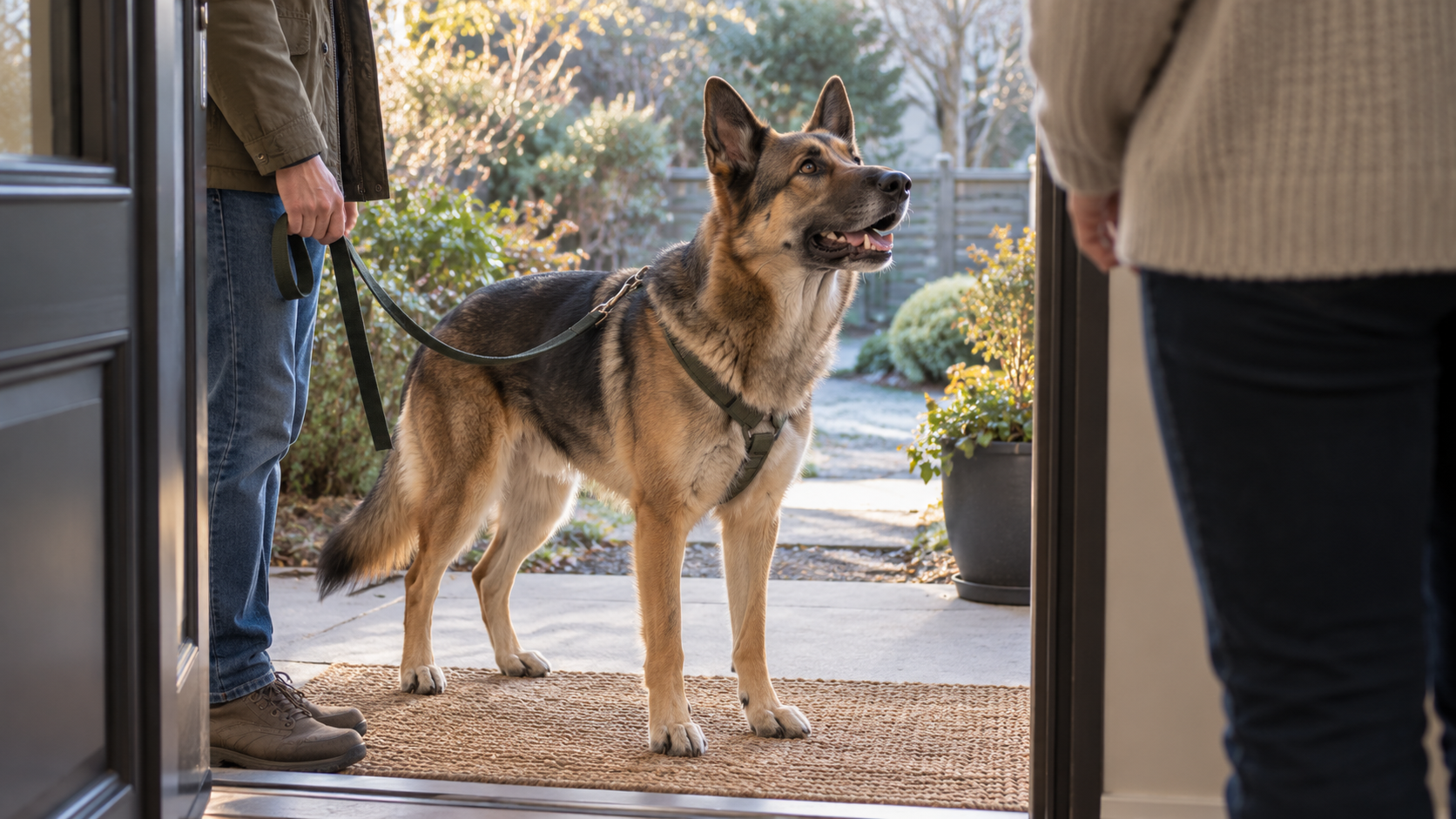
Practice at the doorway, in a hallway, in a quiet parking area, and at the edge of a park. Use a regular leash or, for recall work in open space, a long line attached to a well-fitted harness. Never rely on an untrained recall near roads, livestock, wildlife, or other hazards.
Rehearse emergency movements without an emergency. Teach a cheerful U-turn, a hand target, and a treat scatter. These give you ways to move out of difficulty without dragging the dog.
For a dog who barks or lunges, management and professional assessment may be necessary. Do not use forced close exposure in the hope that the dog will “get used to it.” Repeated overwhelm can strengthen the reaction.
A Two-Week Generalization Plan
During the first week, choose three easy outdoor locations. Practice one skill for two or three minutes in each, then allow decompression and sniffing. Keep distance generous and stop after success. Note the distraction, distance, reward, and recovery.
In the second week, make one change per session: move a little closer, wait slightly longer, or practice at a busier time. If response quality drops, return to the previous level. Generalization is built through many successful versions, not a single proof test.
Seek veterinary or qualified behavior help when outdoor difficulty includes panic, aggression, sudden change, inability to recover, or risk to people or animals. For ordinary distraction, the solution is usually less drama and better engineering: easier context, clearer consequences, and enough repetition for the outdoor cue to acquire its own history.
A Practical Quality Check
Before increasing difficulty in Why Dogs Stop Listening Outside, check the full picture rather than a single successful repetition. For Why Dogs Stop Listening Outside, the dog should be able to notice the cue or situation, perform the response without physical pressure, take the chosen reward if food is being used, and return to a relaxed baseline; write down the location, distraction level, number of clear successes, and any sign of hesitation. While evaluating Why Dogs Stop Listening Outside, that record makes it easier to separate a training gap from fatigue, fear, discomfort, or an environment that was simply too difficult.
Keep the article's central job in view: Frame the problem as incomplete generalization and competing reinforcement, not stubbornness. For Why Dogs Stop Listening Outside, rehearse the easiest useful version in ordinary life, then alter only distance, duration, distraction, or reward value—not all of them together; if performance drops twice, make the next attempt easier instead of repeating the same failed setup. While evaluating Why Dogs Stop Listening Outside, stop promptly for pain, panic, escape risk, aggression, or a sudden behavioral change, and use secure management while seeking appropriate professional help.
One More Planning Pass
Before using Why Dogs Stop Listening Outside in a harder setting, write a one-line plan covering the trigger or cue, the exact response you will reinforce, the reward, the physical safety backup, and the signal that ends the session. For Why Dogs Stop Listening Outside, the article's distinctive purpose remains important: Frame the problem as incomplete generalization and competing reinforcement, not stubbornness; begin where success is highly likely, watch the whole dog between repetitions, and keep enough distance or containment to prevent a mistake from becoming dangerous. While evaluating Why Dogs Stop Listening Outside, review the notes after several short practices; increase only the variable that stayed easy, keep every other feature stable, and return to the earlier version as soon as recovery slows. In the context of Why Dogs Stop Listening Outside, that simple review protects both learning quality and welfare.
Make the plan concrete enough that another adult could follow it without improvising. For Why Dogs Stop Listening Outside, name the room or route, prepare barriers or equipment, choose rewards that are safe for the dog, and decide how many repetitions will be attempted before a break; include a fallback that does not depend on the dog responding to a cue, because management must still work on a difficult day. While evaluating Why Dogs Stop Listening Outside, record what the dog noticed, whether the intended response occurred, and how long recovery took; those observations should determine the next session. In the context of Why Dogs Stop Listening Outside, do not increase several demands just because one repetition looked easy, and do not continue through fear, pain, frantic behavior, aggression, or repeated attempts to escape.