Positive reinforcement is a precise learning term, not a slogan for being nice. It means adding something after a behavior so that the behavior becomes more likely in the future. In dog training, that “something” may be food, play, access, distance, or social contact—provided the dog actually values it.
What Positive Reinforcement Means
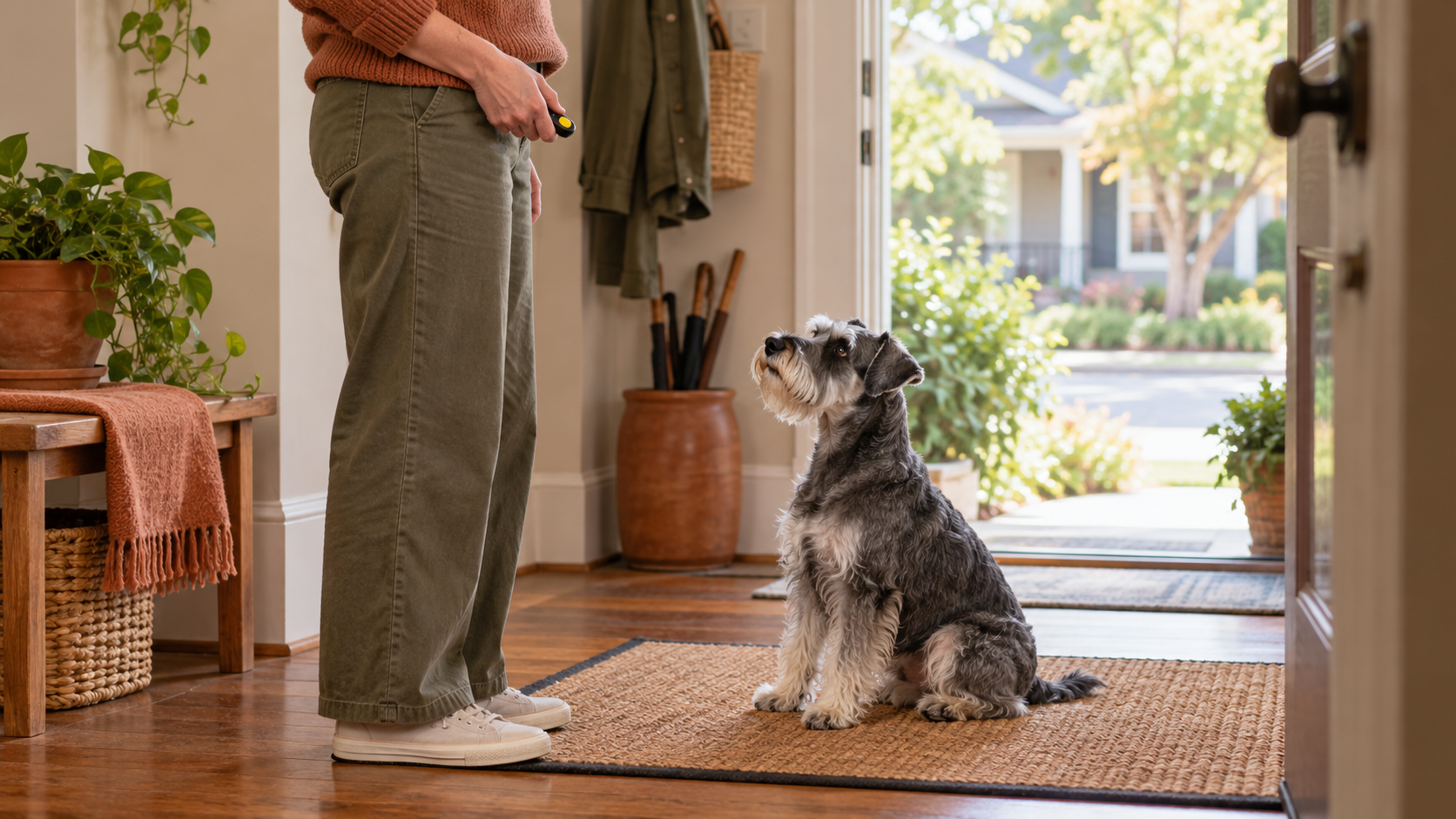
If a dog looks at you, hears “yes,” receives a piece of food, and begins checking in more often, the food reinforced the check-in. If the dog does not repeat the behavior, the intended reward may not have functioned as reinforcement, or the surrounding conditions may have changed.
“Positive” means something was added. It does not mean cheerful, permissive, or morally good. “Reinforcement” means behavior increased. This distinction prevents common misunderstandings. Offering food after a behavior is not proof that reinforcement occurred; future behavior provides the evidence.
AVSAB’s humane dog-training statement recommends reward-based methods for training and behavior modification and rejects aversive methods involving force, pain, or emotional or physical discomfort. That ethical position is broader than the technical definition, but the two fit together: arrange learning around safe outcomes the dog can seek.
Positive Does Not Mean Permissive
Reward-based guardians still use boundaries. They prevent access to hazards, use leashes and gates, and interrupt unsafe situations. The difference is that management is paired with teaching an alternative rather than with intimidation.
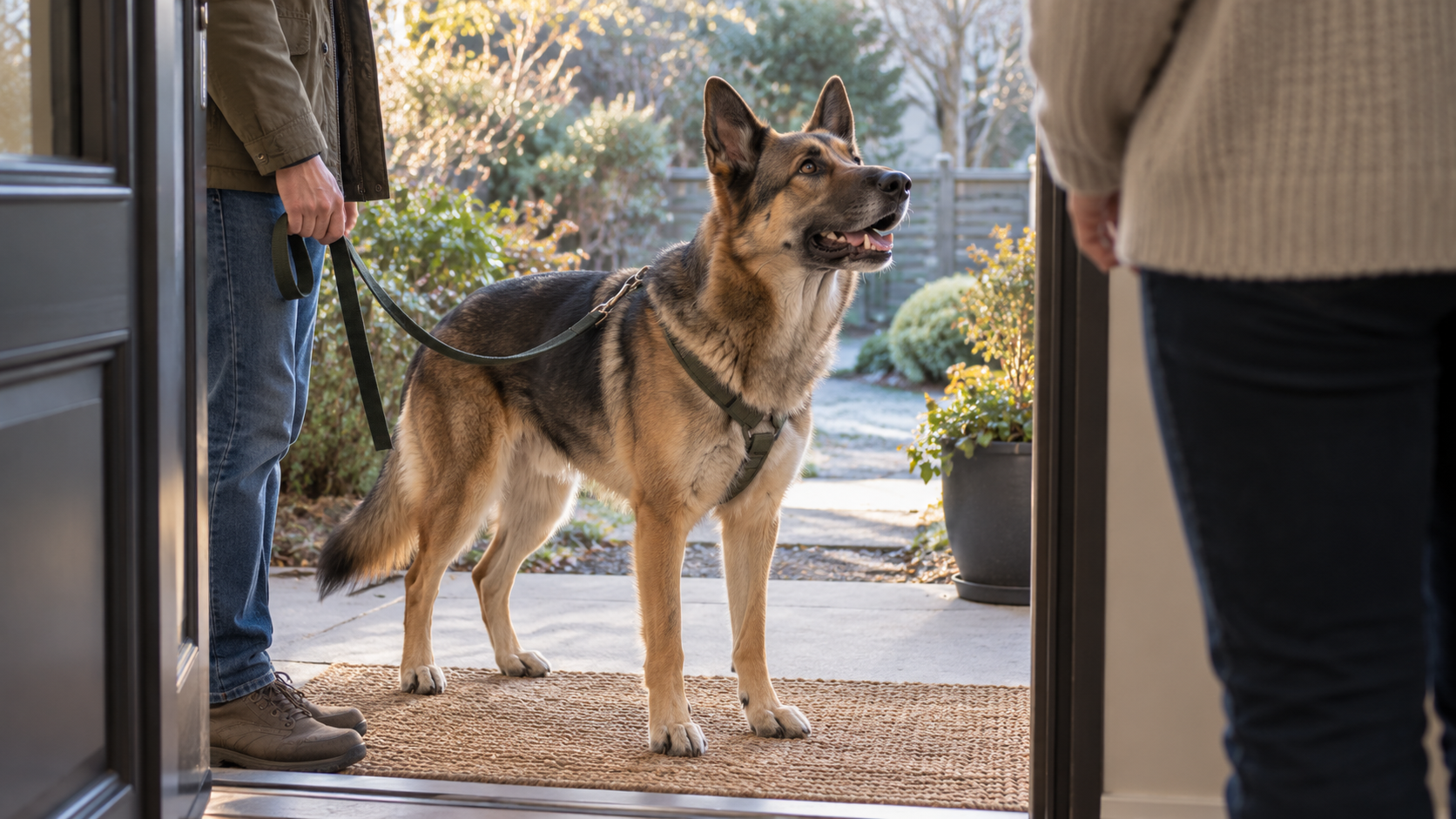
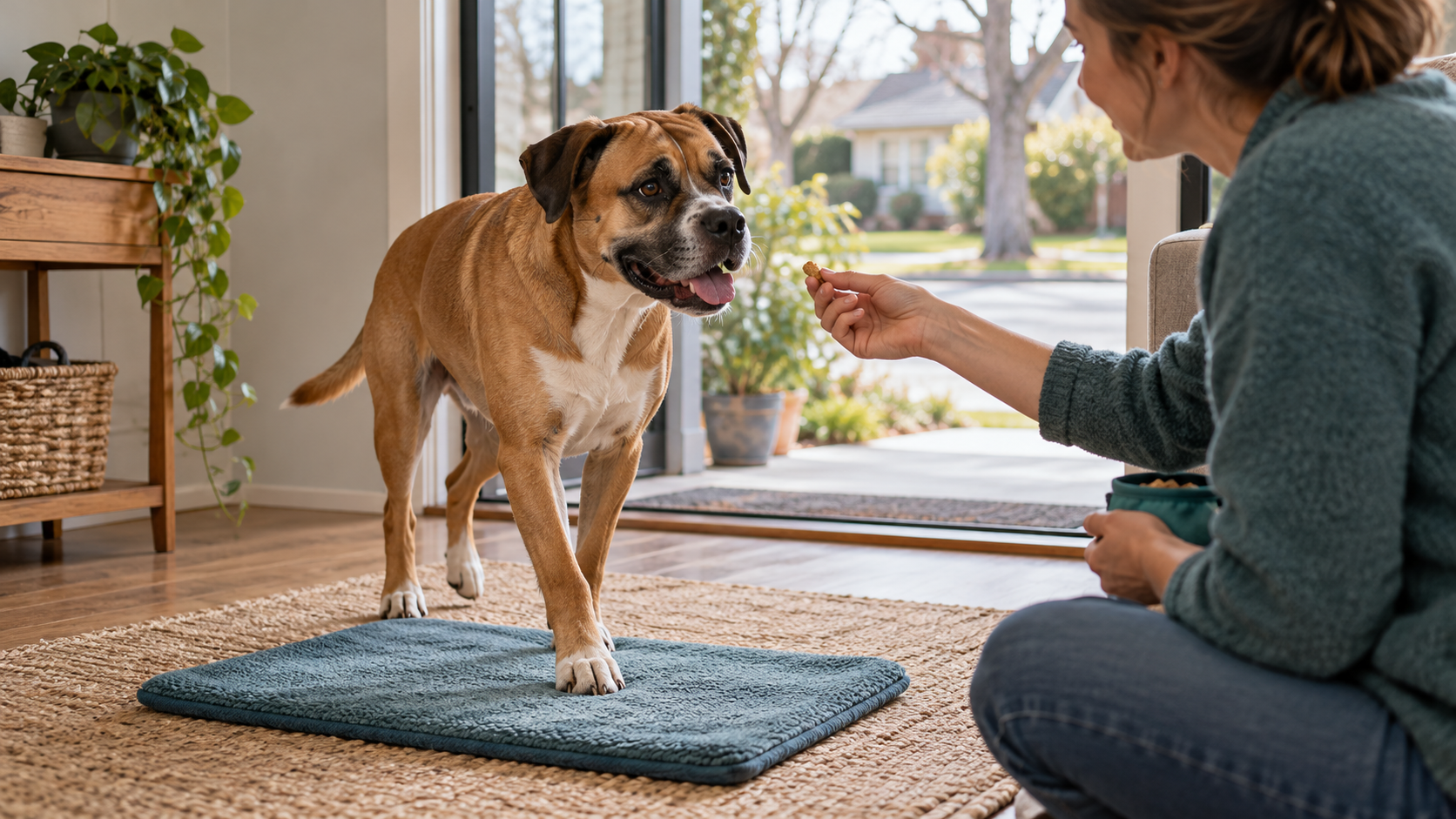
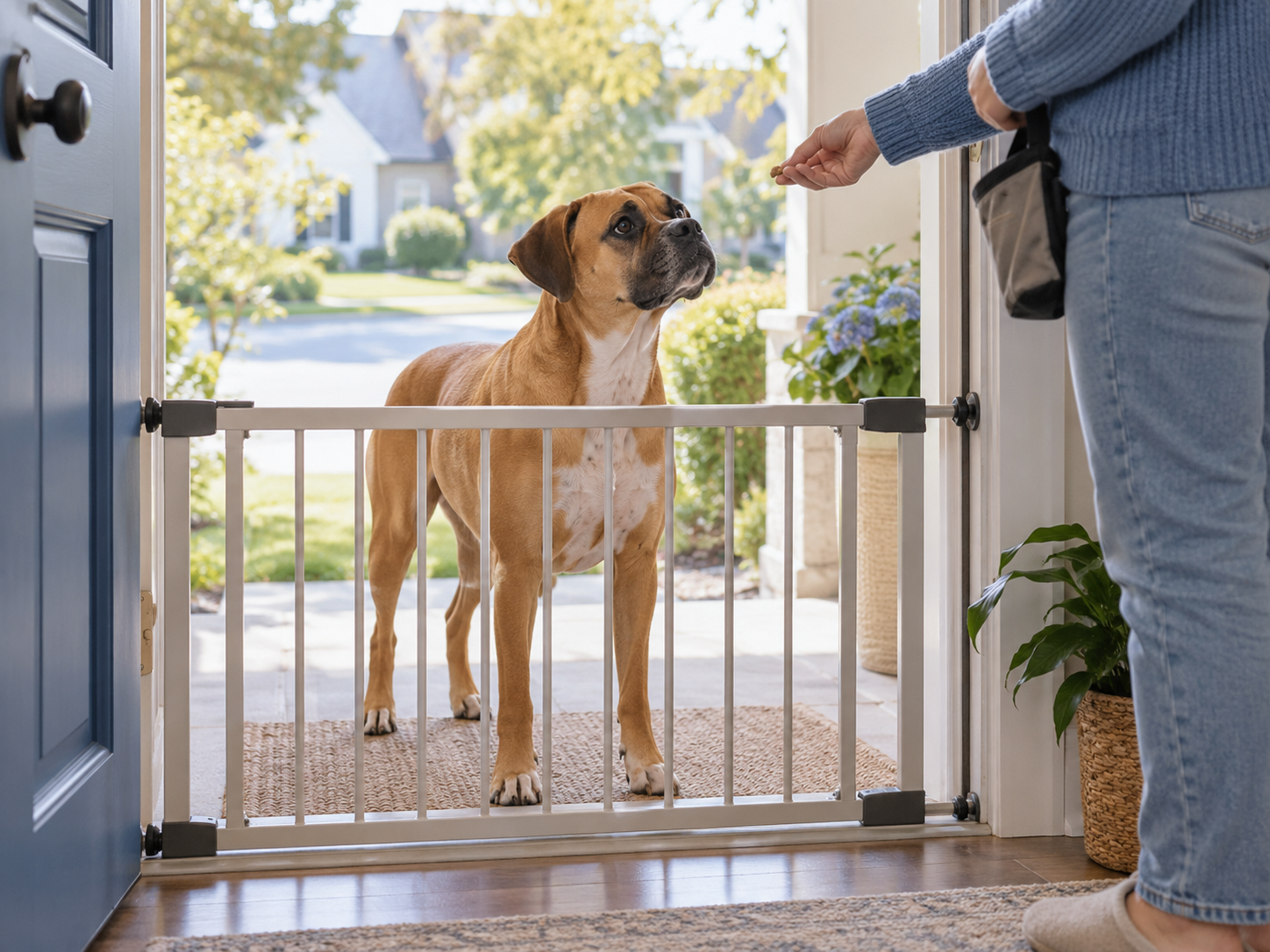
A dog who jumps on visitors may be behind a gate when the door opens. That is management. Away from real arrivals, the dog can learn to go to a mat and earn food or access to a calm greeting. The gate keeps everyone safe while the new behavior develops.
Consequences still exist. If pulling makes forward movement pause and a loose leash makes the walk continue, the environment communicates a rule. The handler does not need to jerk the leash or frighten the dog. Clear criteria and controlled access are not the same as punishment.
The Dog Decides What Reinforces Behavior
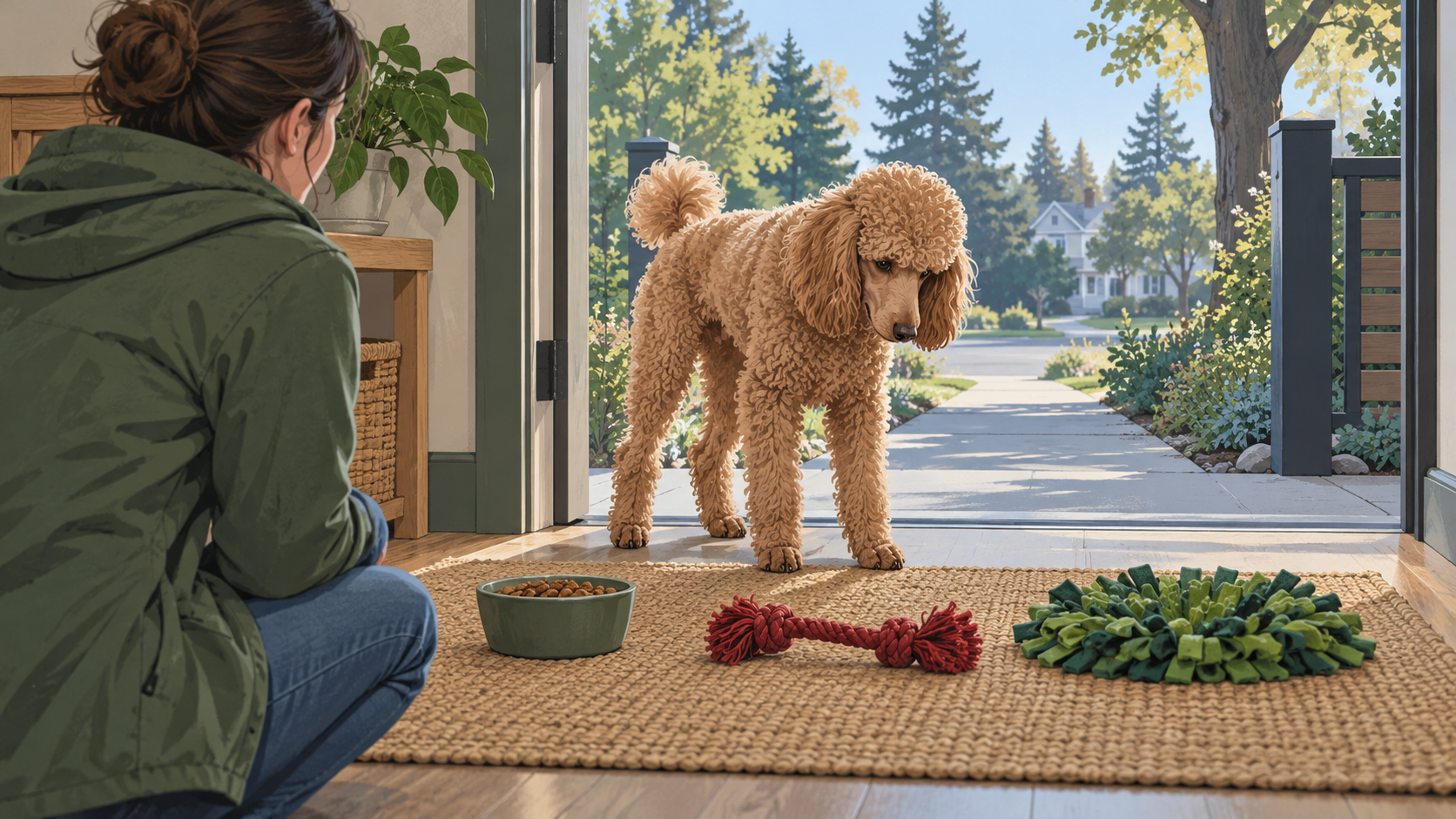
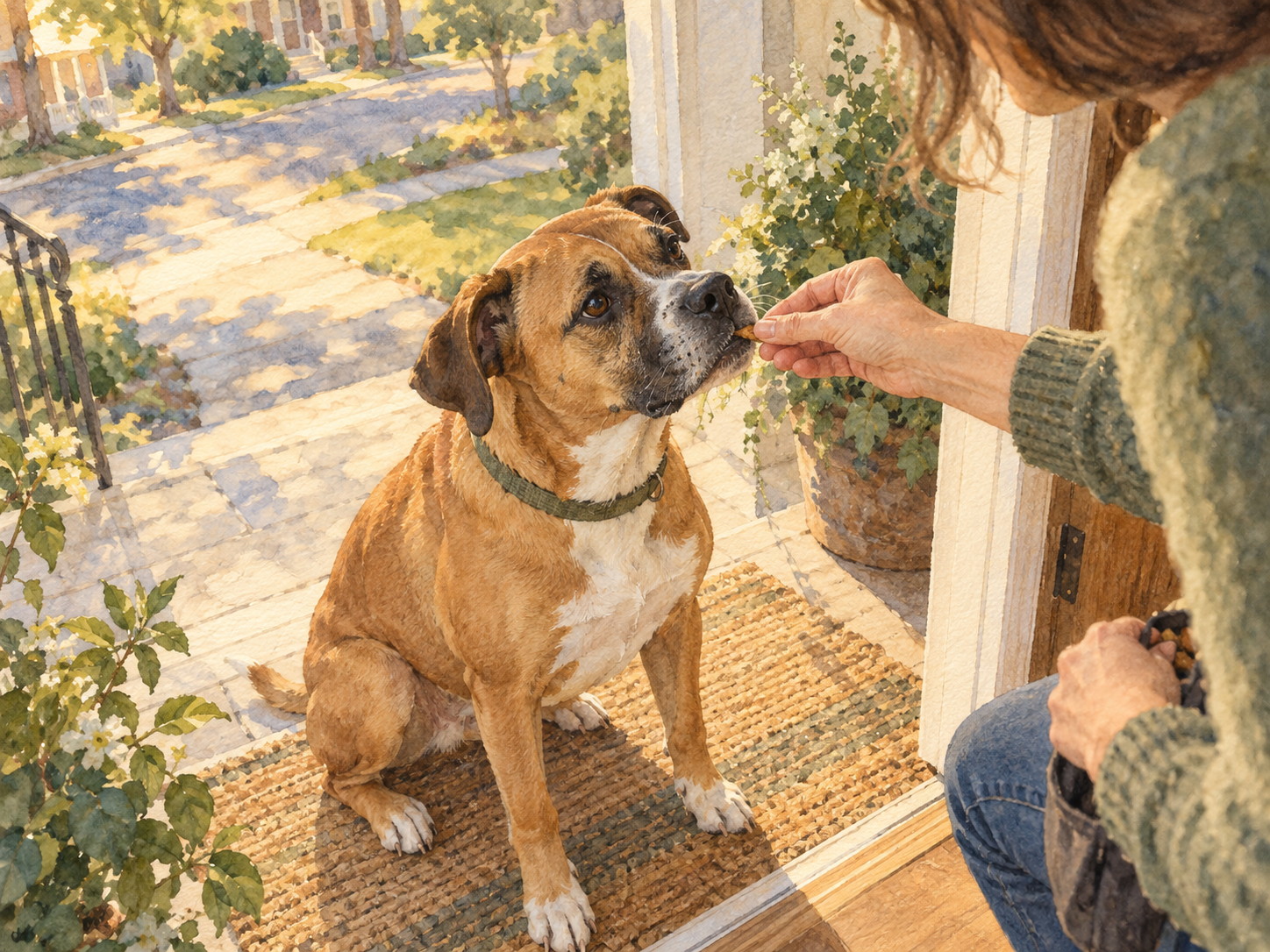
Food is convenient because it can be delivered quickly, but it is not the only option. A sniff of a tree, a tossed toy, permission to greet, opening a door, or moving away from something uncomfortable can all affect behavior.
Observe rather than assume. A dog who leans away from petting is unlikely to experience more petting as a reward. A dog too worried to eat may need distance, not tastier food. A ball that is wonderful in the garden may be irrelevant near a squirrel.
Build a hierarchy of rewards and update it. Value changes with hunger, context, novelty, and competing opportunities. Use modest rewards for easy, familiar work and better rewards when the task or environment is difficult. Make sure food rewards fit the dog’s diet and medical needs.
Timing, Rate, and Clear Criteria
Reinforcement works best when the dog can identify the behavior that produced it. Mark the desired moment, then deliver the reward promptly. Reward placement should support the next repetition. Give a treat on the mat to strengthen staying there; toss one away only when you deliberately want a reset.
At the beginning, reward often. A dog learning to walk beside you in a quiet room may earn food every step or two. As the behavior becomes reliable, vary reinforcement gradually while retaining occasional high-value rewards. Reducing rewards too quickly can make the new behavior less competitive than the environment.
Raise criteria in small increments. Do not ask for longer duration, greater distance, and stronger distractions at once. If errors rise, lower one variable instead of repeating the cue.
Common Myths and Terminology Traps
Reward-based training is not bribery when the reward appears after the behavior. A visible lure can help start a movement, but it should be faded. The goal is a cue followed by behavior, then a consequence—not a dog who acts only after seeing food.
It also does not mean ignoring every unwanted behavior. Ignoring can be ineffective or unsafe, and some behavior is reinforced by the environment rather than attention. Change access, prevent rehearsal, and teach a compatible response.
Finally, reward-based training cannot guarantee that a dog will never experience frustration or fear. Life contains both. The trainer’s job is to avoid deliberately using pain or fear as teaching tools and to keep challenges within a range where the dog can learn.
Ethical Limits and Professional Help
Ordinary skills can often be taught at home. Serious fear, aggression, guarding, panic during absences, or sudden behavior change needs a different level of care. Begin with a veterinarian to rule out pain or illness, then seek a qualified behavior professional who uses humane, evidence-based methods.
Ask prospective trainers to explain what happens when a dog gets something wrong, what equipment they use, and how they measure progress. Avoid vague claims about dominance, guaranteed fixes, or tools that depend on pain, startle, or intimidation.
Positive reinforcement is powerful, but it is not magic. It works because behavior has consequences, the learner has preferences, and carefully designed environments make useful choices worth repeating.
A Practical Quality Check
Before increasing difficulty in What Is Positive Reinforcement in Dog Training?, check the full picture rather than a single successful repetition. For What Is Positive Reinforcement in Dog Training?, the dog should be able to notice the cue or situation, perform the response without physical pressure, take the chosen reward if food is being used, and return to a relaxed baseline; write down the location, distraction level, number of clear successes, and any sign of hesitation. While evaluating What Is Positive Reinforcement in Dog Training?, that record makes it easier to separate a training gap from fatigue, fear, discomfort, or an environment that was simply too difficult.
Keep the article's central job in view: Define the term by its effect on future behavior, then correct common myths with examples. For What Is Positive Reinforcement in Dog Training?, rehearse the easiest useful version in ordinary life, then alter only distance, duration, distraction, or reward value—not all of them together; if performance drops twice, make the next attempt easier instead of repeating the same failed setup. While evaluating What Is Positive Reinforcement in Dog Training?, stop promptly for pain, panic, escape risk, aggression, or a sudden behavioral change, and use secure management while seeking appropriate professional help.
One More Planning Pass
Before using What Is Positive Reinforcement in Dog Training? For What Is Positive Reinforcement in Dog Training?, in a harder setting, write a one-line plan covering the trigger or cue, the exact response you will reinforce, the reward, the physical safety backup, and the signal that ends the session; the article's distinctive purpose remains important: Define the term by its effect on future behavior, then correct common myths with examples. While evaluating What Is Positive Reinforcement in Dog Training?, begin where success is highly likely, watch the whole dog between repetitions, and keep enough distance or containment to prevent a mistake from becoming dangerous; review the notes after several short practices. In the context of What Is Positive Reinforcement in Dog Training?, increase only the variable that stayed easy, keep every other feature stable, and return to the earlier version as soon as recovery slows; that simple review protects both learning quality and welfare.
Make the plan concrete enough that another adult could follow it without improvising. For What Is Positive Reinforcement in Dog Training?, name the room or route, prepare barriers or equipment, choose rewards that are safe for the dog, and decide how many repetitions will be attempted before a break; include a fallback that does not depend on the dog responding to a cue, because management must still work on a difficult day. While evaluating What Is Positive Reinforcement in Dog Training?, record what the dog noticed, whether the intended response occurred, and how long recovery took; those observations should determine the next session. In the context of What Is Positive Reinforcement in Dog Training?, do not increase several demands just because one repetition looked easy, and do not continue through fear, pain, frantic behavior, aggression, or repeated attempts to escape.