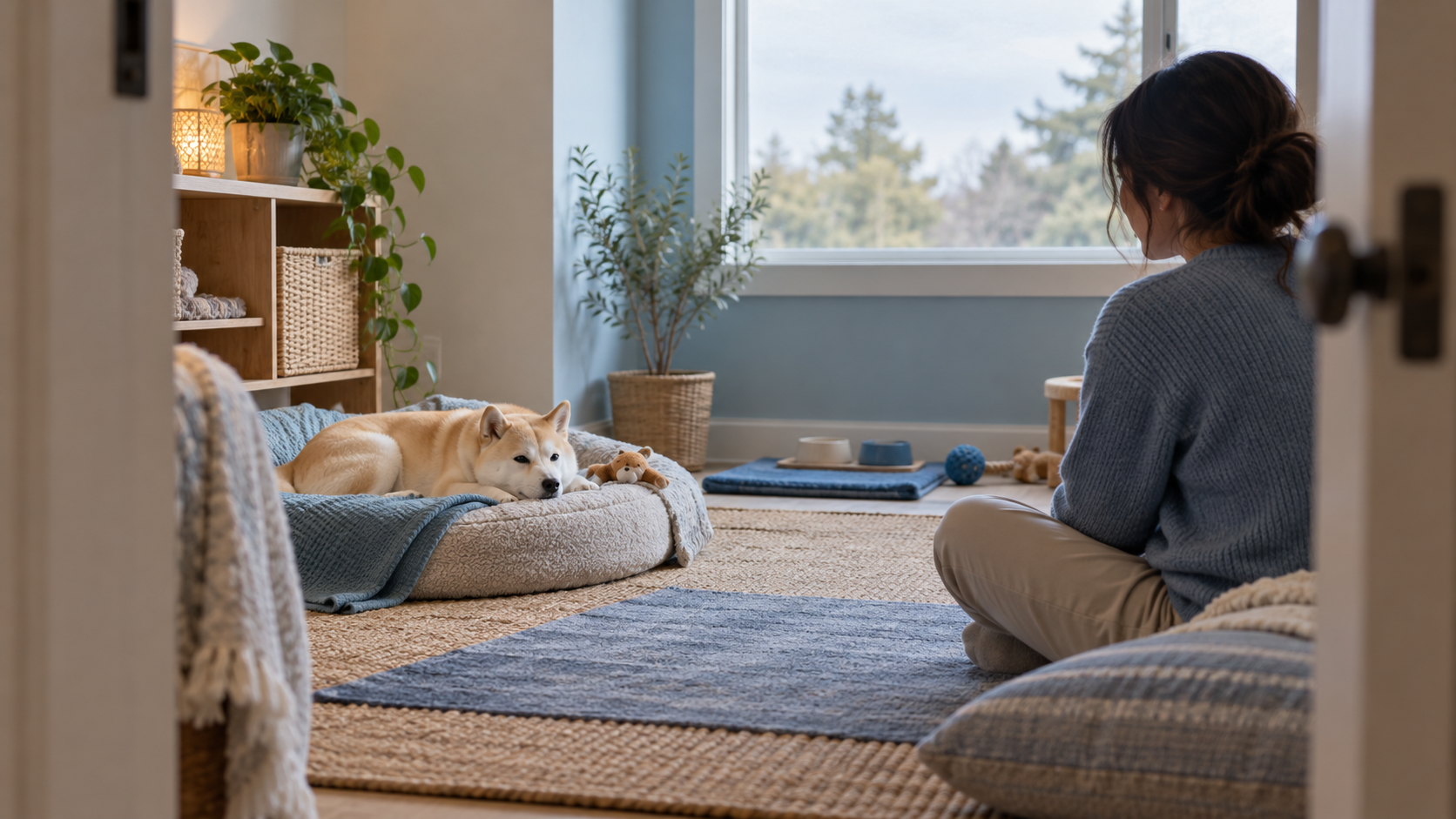
Crate Training Without Fear needs a plan that is useful in ordinary life and honest about its limits. For Crate Training Without Fear, this guide takes a specific route: use choice-based steps and clear criteria for when crate training should stop or change; it uses reward-based teaching, environmental management, and observable stop rules. While evaluating Crate Training Without Fear, the guidance is educational, not a diagnosis or a promise that every dog will progress on the same timetable.
Decide Whether a Crate Fits the Dog
A crate can help with transport or temporary management, but it is not suitable for every dog or every problem. Dogs with confinement panic, medical limitations, or a history of forced crating may need a pen, room, or different plan.
Turn decide whether a crate fits the dog into a short rehearsal with a visible success criterion. For Decide Whether a Crate Fits the Dog, prepare rewards and safety equipment before the dog enters, begin in a familiar low-distraction place, and complete only a few clear repetitions; say a cue once if a cue is needed, mark the response you actually want, and reset without pushing the dog into position. While evaluating Decide Whether a Crate Fits the Dog, if two attempts become harder rather than easier, reduce distance, duration, or distraction instead of repeating the same setup.
Choose Size, Location and Setup
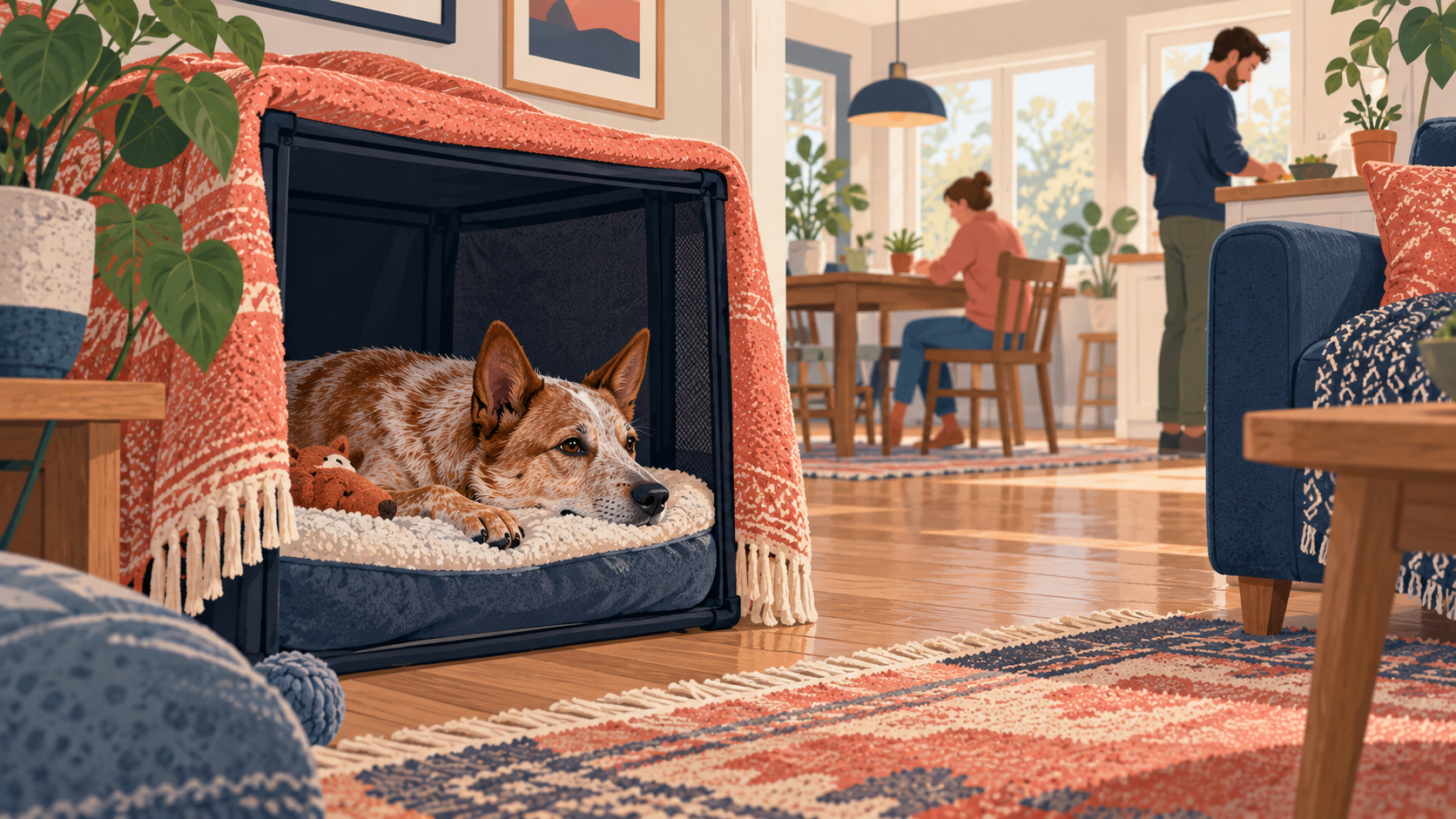
Choose enough space for comfortable standing, turning, resting, and normal posture, with safe ventilation and no snag hazards. Place the crate in a calm household area rather than isolating the dog automatically.
Build choose size, location and setup from the easiest version the dog can perform comfortably. For Choose Size, Location and Setup, duration, distance, distraction, and reward value are separate variables, so alter only one while the others stay stable; insert easy repetitions between harder ones and finish before attention or movement deteriorates. While evaluating Choose Size, Location and Setup, this makes progress measurable: the dog succeeds because the task was understandable, not because restraint, leash pressure, or repeated commands removed every other option.
Build Voluntary Entry
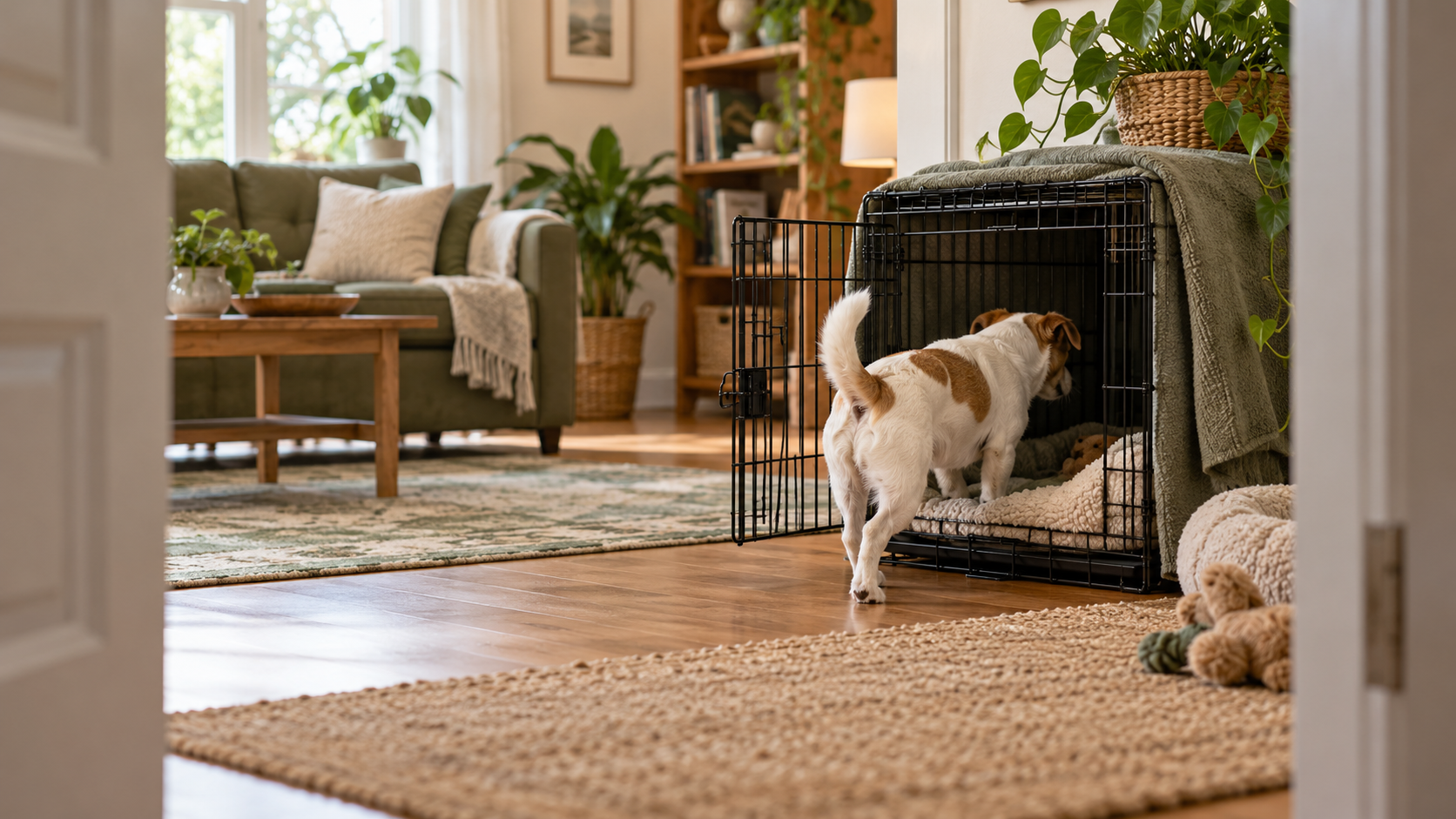
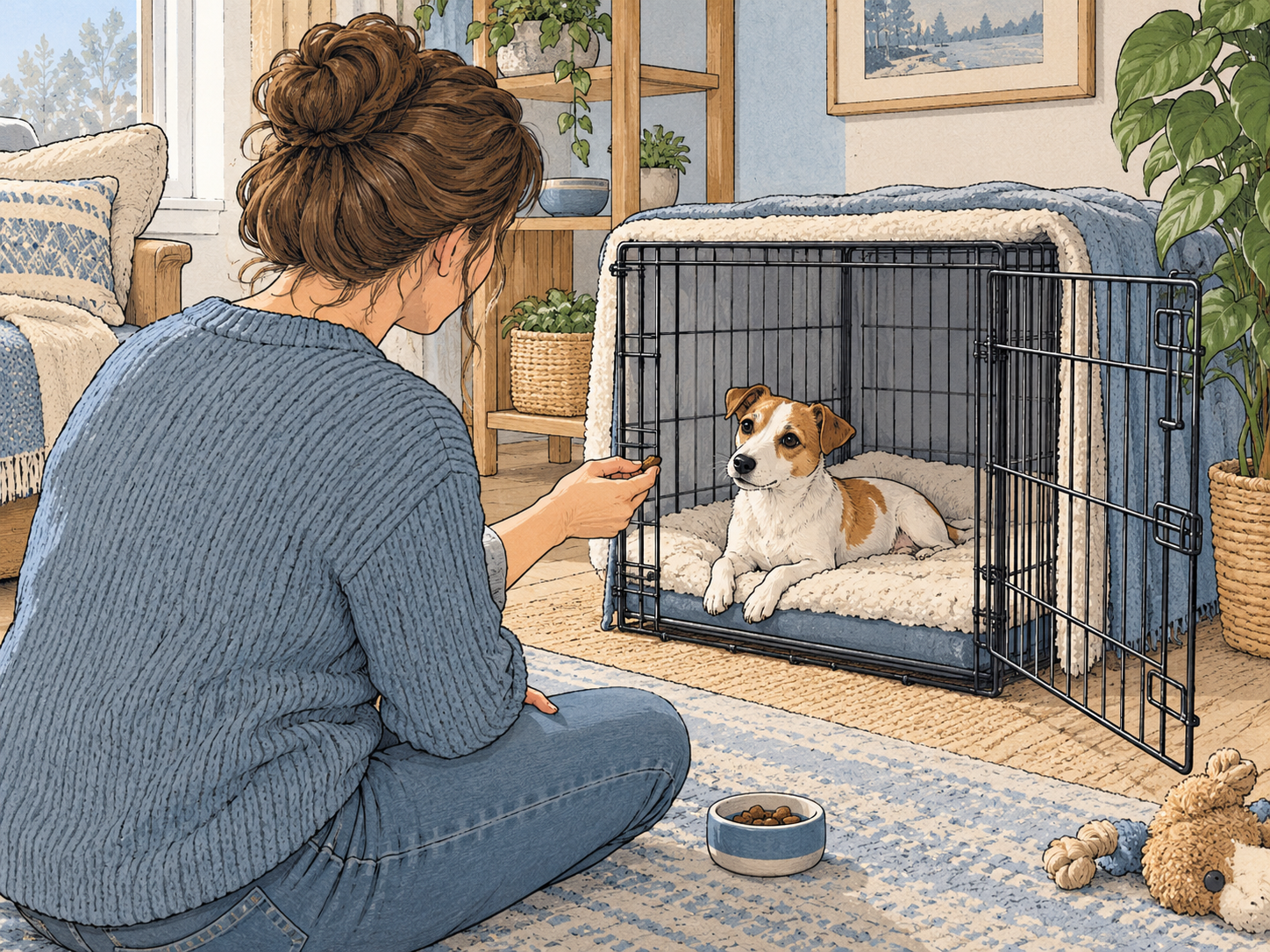
Secure the door open and reward looking, approaching, entering, and leaving freely. Meals or safe food toys can build a positive association, but never push the dog inside or block the exit during these first steps.
Plan a realistic example of build voluntary entry before relying on it in daily life. For Build Voluntary Entry, rehearse when the doorway, visitor, car, child, or outdoor trigger is absent or carefully controlled, then add one mild feature; keep a leash, gate, retreat, or other physical backup wherever a failed response could matter. While evaluating Build Voluntary Entry, training supplies communication; management supplies the safety margin while that communication is not yet reliable.
Add the Door in Tiny Steps
When the dog is choosing to rest inside, move the door slightly, reward, and reopen it. Build from a second or two while you remain nearby; do not jump from open-door comfort to a long locked absence.
Measure add the door in tiny steps by fluency and recovery rather than one dramatic success. For Add the Door in Tiny Steps, note whether the dog responds promptly, remains physically loose, accepts reinforcement when appropriate, and can settle after the attempt; a slow or absent response may point to confusion, discomfort, fear, fatigue, or competing rewards. While evaluating Add the Door in Tiny Steps, check those possibilities before raising criteria, and seek veterinary advice for a new reluctance to move, eat, be handled, or perform a familiar action.
Extend Duration Without Isolation Panic
Increase closed-door time and your distance separately. Return before distress, include normal activity and rest outside the crate, and avoid using confinement as a substitute for toileting, exercise, social contact, or treatment.
Generalize extend duration without isolation panic deliberately. For Extend Duration Without Isolation Panic, change rooms, surfaces, people, and background activity in small steps, returning often to an easy version; dogs do not automatically apply a kitchen lesson to a hallway, park, or clinic, and a stronger distraction may require greater distance and better reinforcement. While evaluating Extend Duration Without Isolation Panic, preserve the same cue and success criterion while the setting changes so the dog is learning one portable skill rather than a series of unrelated guesses.
Stop Signs and Humane Alternatives
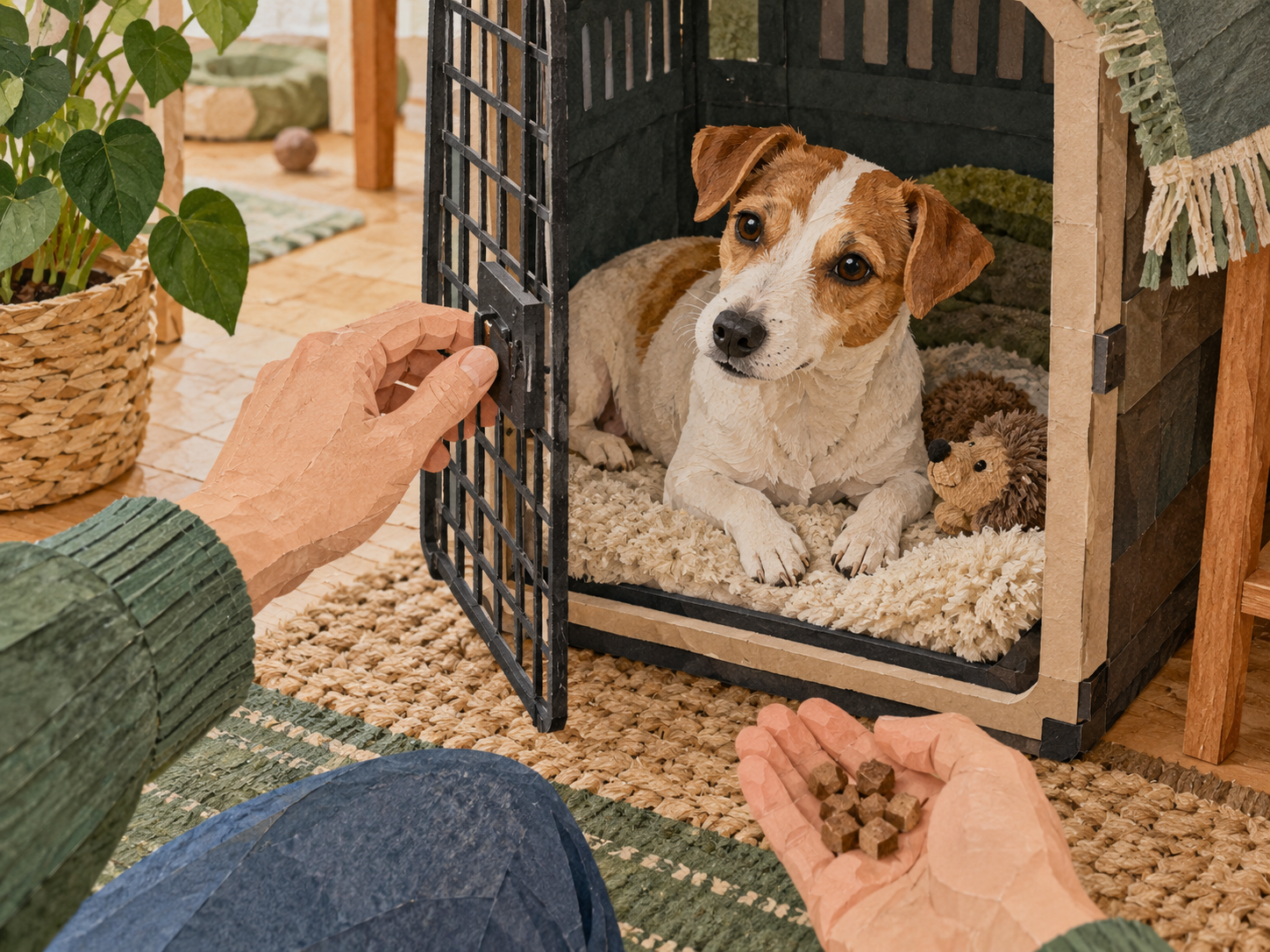
Stop if the dog pants without heat, drools, claws, bites bars, refuses valued food, vocalizes intensely, or tries to escape. Release safely when possible and seek professional guidance rather than waiting for panic to extinguish.
Treat stop signs and humane alternatives as a boundary for home guidance, not as another exercise to push through. For Stop Signs and Humane Alternatives, write down the exact behavior, its trigger, intensity, duration, and recovery, then prevent another high-risk rehearsal while help is arranged; sudden change, pain, self-injury, escape danger, a bite, or inability to meet basic needs raises urgency. While evaluating Stop Signs and Humane Alternatives, a veterinarian can assess medical contributors; a suitably qualified behavior professional can build an individualized plan; online steps cannot make an uncontrolled environment safe.
The Practical Takeaway
For Crate Training Without Fear, progress should make the next repetition clearer and safer, not merely more difficult. For Crate Training Without Fear, keep the last easy success available, change one condition at a time, and let the dog's comfort and recovery set the pace; use physical management anywhere a mistake could cause harm. While evaluating Crate Training Without Fear, when pain, panic, aggression, escape risk, or sudden behavioral change enters the picture, pause the home experiment and bring specific observations to a veterinarian or appropriately qualified behavior professional.
One More Planning Pass
Before using Crate Training Without Fear in a harder setting, write a one-line plan covering the trigger or cue, the exact response you will reinforce, the reward, the physical safety backup, and the signal that ends the session. For Crate Training Without Fear, the article's distinctive purpose remains important: Use choice-based steps and clear criteria for when crate training should stop or change; begin where success is highly likely, watch the whole dog between repetitions, and keep enough distance or containment to prevent a mistake from becoming dangerous. While evaluating Crate Training Without Fear, review the notes after several short practices; increase only the variable that stayed easy, keep every other feature stable, and return to the earlier version as soon as recovery slows. In the context of Crate Training Without Fear, that simple review protects both learning quality and welfare.
Make the plan concrete enough that another adult could follow it without improvising. For Crate Training Without Fear, name the room or route, prepare barriers or equipment, choose rewards that are safe for the dog, and decide how many repetitions will be attempted before a break; include a fallback that does not depend on the dog responding to a cue, because management must still work on a difficult day. While evaluating Crate Training Without Fear, record what the dog noticed, whether the intended response occurred, and how long recovery took; those observations should determine the next session. In the context of Crate Training Without Fear, do not increase several demands just because one repetition looked easy, and do not continue through fear, pain, frantic behavior, aggression, or repeated attempts to escape.